For your next oil change in 2026, most modern cars can go roughly 5,000 to 10,000 miles, or about 12 months, whichever comes first. The right number depends on your engine, your oil type and how you drive. Your owner’s manual gives the official answer, so start there.
Is the 3,000-Mile Oil Change Rule Still True?
No, for most cars built in the last couple of decades. The 3,000-mile rule came from an era of simpler engines and less durable oil. AAA calls the 3,000-mile belief a myth, since today’s engine oil contains additives that extend its life. A Consumer Reports study reportedly found no noticeable difference in engine protection between changing oil every 3,000 miles and every 7,500 miles.
Changing oil sooner won’t hurt your engine, but it can hurt your wallet.
How Often Should You Change Your Oil in 2026?
Follow the schedule in your owner’s manual. AAA advises checking the manual, which may list one schedule for normal conditions and another for severe service, and following your oil life monitor if the car has one.
As a general guide, many automakers now say 7,500 to 10,000 miles, or six to 12 months, is fine between changes. Toyota is one example. Its guidance is 10,000 miles with full synthetic oil and 5,000 miles with semi-synthetic or conventional oil.
| Situation | What to expect |
| Normal driving, full synthetic oil | Often 7,500–10,000 miles or 12 months (check your manual) |
| Synthetic blend or conventional oil | Often shorter, around 5,000 miles on some makes |
| Severe driving conditions | Follow the severe-service schedule, often shorter |
| Under the 3,000-mile rule | Usually unnecessary on modern cars |
Intervals vary by manufacturer, so treat this table as a starting point, not a rule.
Mileage or Time: Which Comes First?
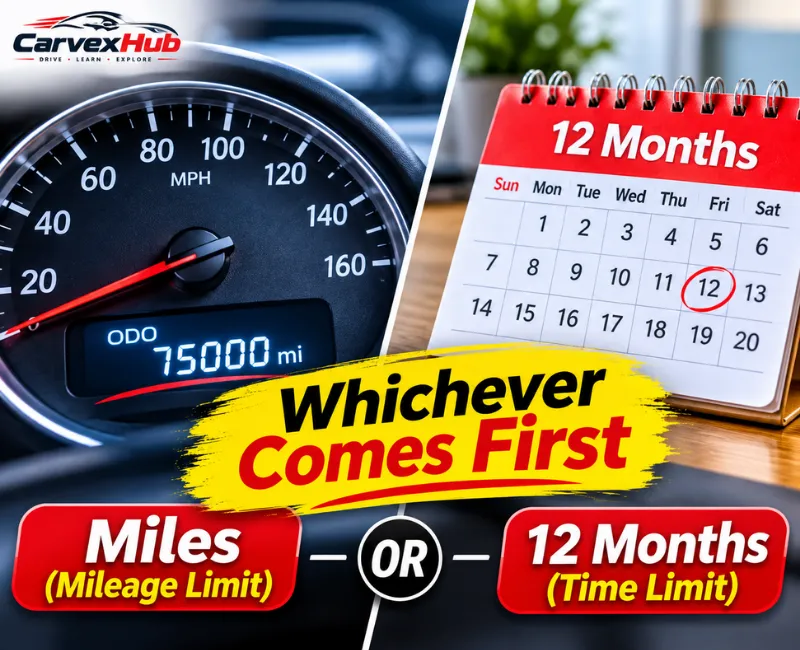
Both matter. Oil ages even when the car sits, so low-mileage drivers shouldn’t wait for the odometer alone. If you drive only about 2,000 miles a year, you shouldn’t assume you can go years without an oil change. A simple rule is to change oil at the mileage or the time limit in your manual, whichever comes first, which is usually 6 to 12 months.
What Counts as Severe Driving Conditions?
Severe driving is harder on oil than most drivers realize. Owner’s manuals commonly list intense heat, towing, track use and dusty environments, such as constant gravel roads, as heavy-duty situations. Other common triggers include:
- Frequent short trips where the engine never fully warms up
- Stop-and-go traffic and long idling
- Hauling heavy loads
- Driving a turbocharged engine, which runs hotter
If several of these describe your week, check the severe-service schedule in your manual.
Oil Change in Hot Weather
Heat thins and degrades oil faster. If you’re wondering how often to change oil in Texas heat, there’s no universal number. Look at your manual’s severe-service interval, and consider it if you also sit in traffic or tow.
Oil Change in Cold Weather
In winter, short trips do not let the engine warm up,and this damages the oil. Use the viscosity your manual recommends for cold starts, for example 0W-20 or 5W-30 on many modern cars.
Full Synthetic vs. Synthetic Blend vs. Conventional Oil
Choosing the right engine oil is important for long-term engine protection. Explore our complete guide to car oil and filter types, their benefits, and maintenance to understand which option is best for your vehicle.
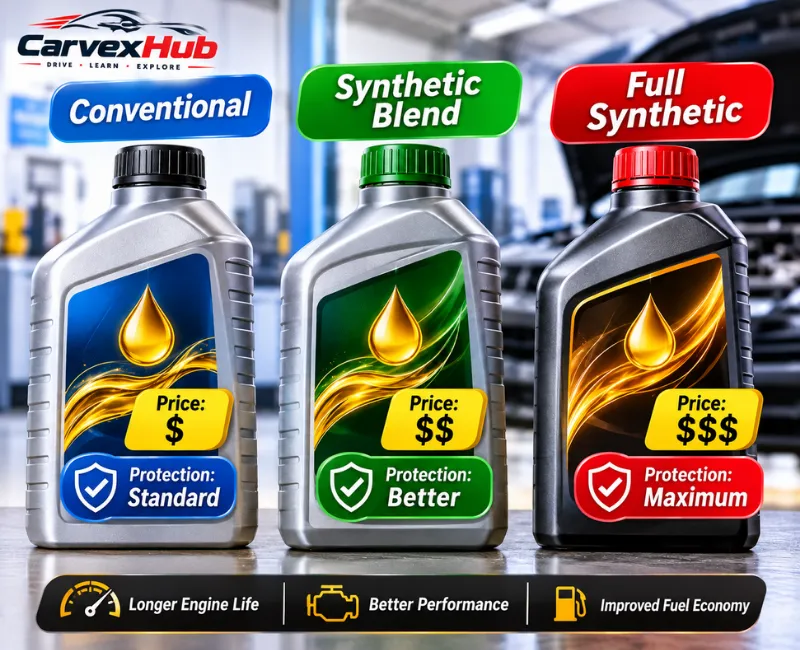
- Conventional oil: Refined from crude oil. It’s the cheapest option and usually needs more frequent changes.
- Synthetic blend: A mix of synthetic and conventional oil, in the middle for price and protection.
- Full synthetic oil: Engineered to resist breakdown and handle temperature extremes. It’s required or recommended in many newer engines.
What Do 5W-30 and 0W-20 Mean?
The first number (with W) shows how the oil flows when it is cold.The second number shows how it behaves at engine temperature.Always use the viscosity and details given in your manual. Using a thicker oil than recommended isn’t an upgrade.
Is High-Mileage Oil Worth It?
High-mileage oil is formulated for older engines, usually past about 75,000 miles. It can be a reasonable choice if your manual allows it and your engine is aging, but it isn’t a way to stretch your interval.
Can You Trust Your Oil Life Monitor?
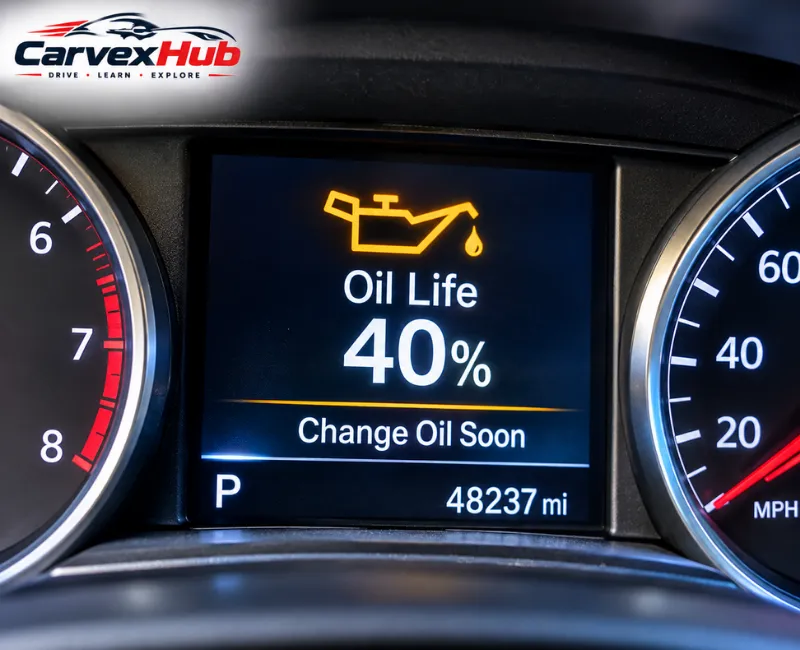
Mostly, yes.The oil life monitor does not check the oil itself.. It uses an algorithm that looks at temperature cycles, engine load, RPM, idle time and driving conditions to estimate remaining oil life. That makes it more tailored than a fixed mileage number.
A few tips:
- Use the oil grade your manual specifies, since the monitor assumes you do.
- Reset the oil change reminder or maintenance light after every service. The method is in your manual.
- If you tow or live somewhere extreme, ask a mechanic whether to change earlier than the monitor says.
How Much Does an Oil Change Cost in 2026?
At quick-lube shops, an oil change costs about 35–75 with conventional oil, 45–100 with a synthetic blend and 70–125 with full synthetic, with dealers averaging around $100. Prices depend on your oil capacity, your location and any add-ons.
| Oil type | Typical shop price (2026) |
| Conventional | 35–75 |
| Synthetic blend | 45–100 |
| Full synthetic | 70–125 |
Doing it yourself costs less in parts, but you’ll need to dispose of the old oil properly. One tracker listed Walmart’s conventional oil change at $38.88 and full synthetic at 62.88–76.88 in November 2026, noting prices vary by store.
The synthetic oil change cost is higher upfront, but longer intervals can offset it. Compare cost per mile, not just the price tag.
What Happens If You Skip or Delay an Oil Change?
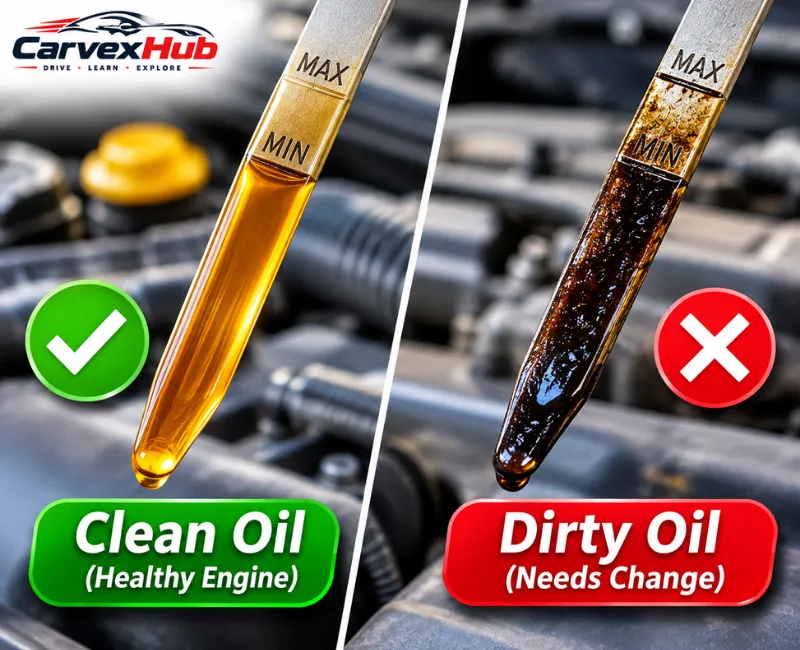
Occasionally going a few hundred miles over won’t wreck your engine. Regularly stretching past your manual’s limit is a different story. Old oil loses its ability to protect, which can lead to:
- Engine sludge and deposits
- Faster engine wear
- Lower fuel economy
- Costly repairs over time
- Regular oil changes are essential for protecting engine components and reducing premature wear. Learn more about how a car engine works and how to maintain it
Also keep an eye on the oil level.AAA recommends checking the oil level monthly and topping up as needed, especially as the car ages.
Final Thoughts: Setting Your Oil Change Schedule for 2026
The best oil change schedule is the one in your owner’s manual, adjusted for how you really drive. Use full synthetic oil if your car calls for it, watch the calendar as well as the odometer, and don’t treat 3,000 miles as a rule. Take five minutes today to open your manual, find your interval, and set a reminder for your next oil change.
FAQs
1. How often should I change the oil in my 2026 car: every 5,000 or 10,000 miles, and can full synthetic oil really last 10,000 miles?
Follow your owner’s manual or oil life monitor, which usually means every 7,500-10,000 miles or 12 months. Full synthetic can last 10,000 miles with normal driving, while severe driving or conventional oil calls for about 5,000.
2. How much should an oil change cost in 2026?
At quick-lube shops, expect about $35-75 for conventional, $45-100 for synthetic blend and $70-125 for full synthetic. Dealers average around $100.
3. Can I go 2 years between oil changes?
Usually no, because oil ages and breaks down even when the car sits. Change it at least once a year, even with low mileage.
4. Does dark oil mean it needs changing?
Not by itself, since oil darkens as it picks up contaminants. Judge by mileage, time and your oil life monitor instead.
5. Is topping off oil the same as an oil change?
No. Topping off only restores the level, while an oil change removes contaminants and refreshes the additives.
6. Do I need to change the oil filter every time?
Generally yes, because a clogged or worn filter defeats the purpose of fresh oil.
7. What should I do with used oil?
Take it to a recycling center or a retailer that accepts it. The EPA estimates one gallon of used oil can contaminate up to one million gallons of drinking water.
