Car overheating happens when an engine becomes hotter than its normal operating temperature. It can happen while driving on a highway, sitting in traffic, or traveling in hot summer weather. Low coolant, radiator problems, a faulty thermostat, and water pump failure are common causes.
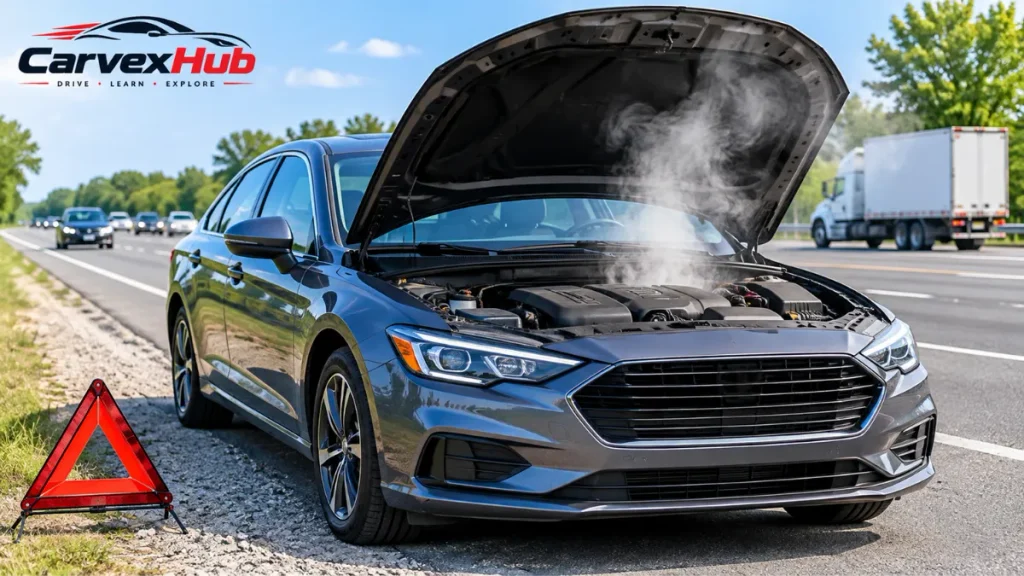
Your vehicle’s cooling system controls engine temperature and prevents heat-related damage. When a component stops working properly, the engine may become dangerously hot.
Understanding the warning signs and knowing what to do when your car overheats can help prevent expensive repairs. Here are the common causes, emergency steps, and maintenance tips every driver should know.
What Does It Mean When Your Car Is Overheating?
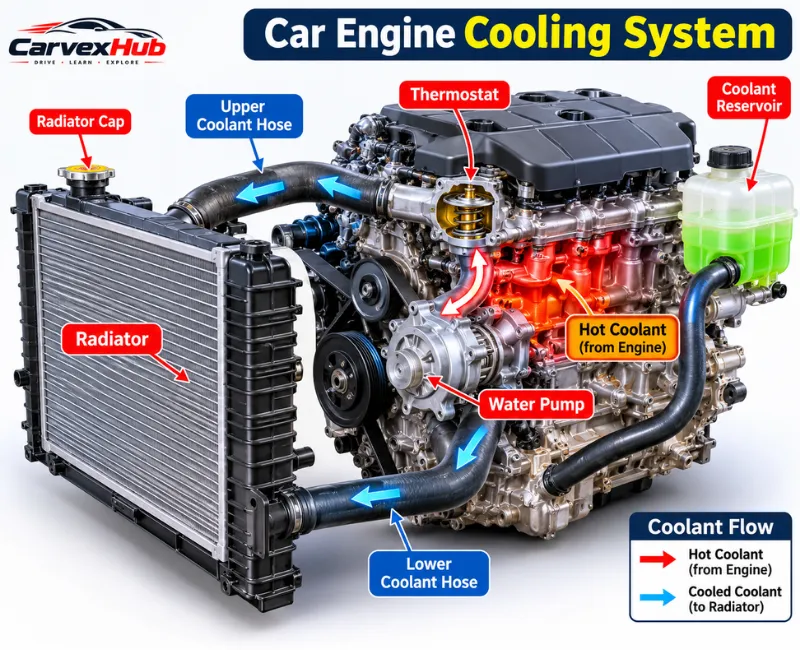
Car overheating means the engine temperature has risen beyond its normal operating range. Your car uses coolant, radiator, water pump, and thermostat to control the engine heat. Understanding how your engine works can also help you identify temperature-related problems. Read our complete guide on how a car engine works and how to maintain it
The coolant takes heat from the engine and carries it to the radiator, where the heat is released into the air around it.
When coolant levels become low or circulation is interrupted, the engine cannot remove heat effectively. This may cause the temperature gauge to rise or trigger an engine temperature warning light.
7 Common Signs Your Car Engine Is Overheating
Recognizing early symptoms can help you respond before serious engine damage occurs.
1. Temperature Gauge Reaches the Red Zone
If the dashboard temperature gauge moves toward the red zone, your engine may be overheating. Stop driving as soon as it is safe.
2. Steam Coming From Under the Hood
White steam may indicate hot coolant escaping from the cooling system. Pull over safely and avoid touching hot engine components.
3. Sweet or Burning Smell
A sweet smell may indicate leaking coolant, while a burning odor can come from overheated oil, rubber, or plastic components.
4. Coolant Leaking Under the Vehicle
Colored fluid beneath your parked car may indicate a coolant leak. Check around hoses and the radiator only after the engine has cooled.
5. Reduced Engine Performance
An overheated engine may lose power, accelerate poorly, or run unevenly. These symptoms require immediate attention.
6. Engine Temperature Warning Light
A temperature warning light indicates that your engine needs attention. Check your owner’s manual and stop safely.
7. Heater Suddenly Blows Cold Air
If your cabin heater blows cold air while engine temperature rises, low coolant or poor coolant circulation could be responsible.
What Should You Do When Your Car Overheats?
If your car overheats while driving, follow these steps to reduce the risk of engine damage.
1. Turn Off the Air Conditioning
Switch off the AC to reduce the engine’s workload. Turning on the cabin heater temporarily may help remove some engine heat while you reach a safe stopping location.
2. Pull Over to a Safe Location
Turn on your hazard lights and move to a safe shoulder or parking area. Avoid stopping in an active traffic lane.
3. Turn Off the Engine
Once safely parked, switch off the engine to prevent additional heat buildup.
4. Let the Engine Cool Down
The engine cool down completely before checking the cooling system. This may take 30 minutes or longer.
Never remove a hot radiator cap or coolant reservoir cap. Pressurized coolant can escape suddenly and cause serious burns.
5. Check Coolant Levels
Once the engine is completely cool, inspect the coolant reservoir. Check whether the fluid is between the minimum and maximum markings.
Look for visible leaks around the radiator, hoses, and underneath the vehicle.
6. Call for Roadside Assistance
If steam appeared, coolant is leaking, or the engine overheats again, arrange roadside assistance and have the vehicle towed to a repair shop.
8 Common Causes of Car Overheating
Many problems in the cooling system can cause the engine temperature to go up. Understanding these issues makes car overheating troubleshooting easier.
1. Low Engine Coolant Levels
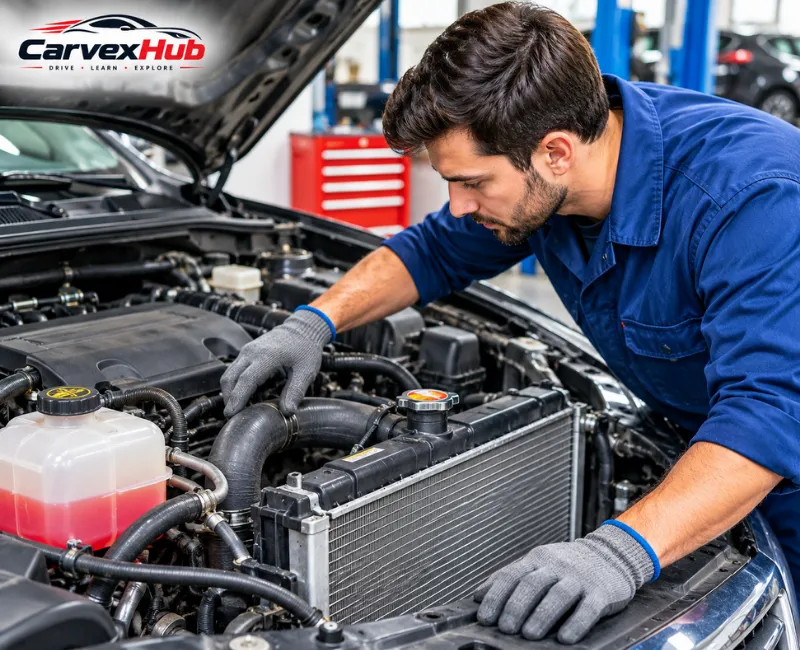
Low coolant is a common reason for the engine getting too hot. Without enough coolant, the system cannot transfer heat away from the engine effectively.
Check the coolant reservoir when the engine is cold. If the level repeatedly drops, have the system inspected for leaks.
2. Coolant Leaks
Damaged radiator hoses, loose connections, cracked reservoirs, or leaking radiators can allow coolant to escape.
Look for wet spots or dried coolant residue around cooling system components. A mechanic can perform a pressure test to identify hidden leaks.
3. Faulty Thermostat
The thermostat controls the flow of coolant between the engine and the radiator. If it becomes stuck closed, coolant flow may be restricted, causing engine temperature to rise quickly.
Repeated overheating can be a symptom of a bad thermostat.
4. Bad Water Pump
The water pump moves the coolant around the whole cooling system. A damaged pump, worn bearings, or leaking seals can interrupt coolant circulation.
Common warning signs include coolant leaks, unusual noises, and repeated overheating.
5. Clogged or Damaged Radiator
The radiator releases the heat from the coolant into the air. Corrosion, dirt, internal deposits, or physical damage can reduce its cooling ability.
A mechanic can check the radiator for blockage and leaks.
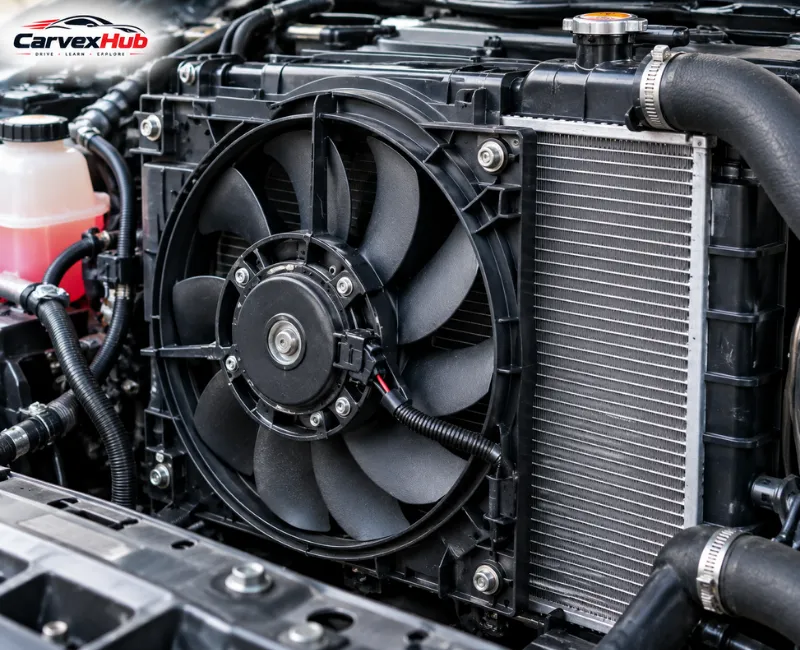
6. Radiator Fan Not Working
The radiator fan moves air through the radiator, especially when the car is moving slowly.
A bad fan motor, bad wiring, or a failed relay can cause overheating in traffic.
7. Low Engine Oil
Engine oil lubricates moving parts and helps carry heat away from important engine components. Low oil levels can increase friction and contribute to excessive heat. Using the correct oil and replacing it regularly can help protect engine components. Learn more about car oil and filter types, benefits, and maintenance
Check the dipstick regularly and use the oil recommended by your vehicle manufacturer.
8. Blown Head Gasket
A damaged head gasket can allow coolant to enter the combustion chambers or mix with engine oil.
Warning signs include unexplained coolant loss, white exhaust smoke, milky-looking oil, and repeated overheating. A professional inspection is necessary to confirm the problem.
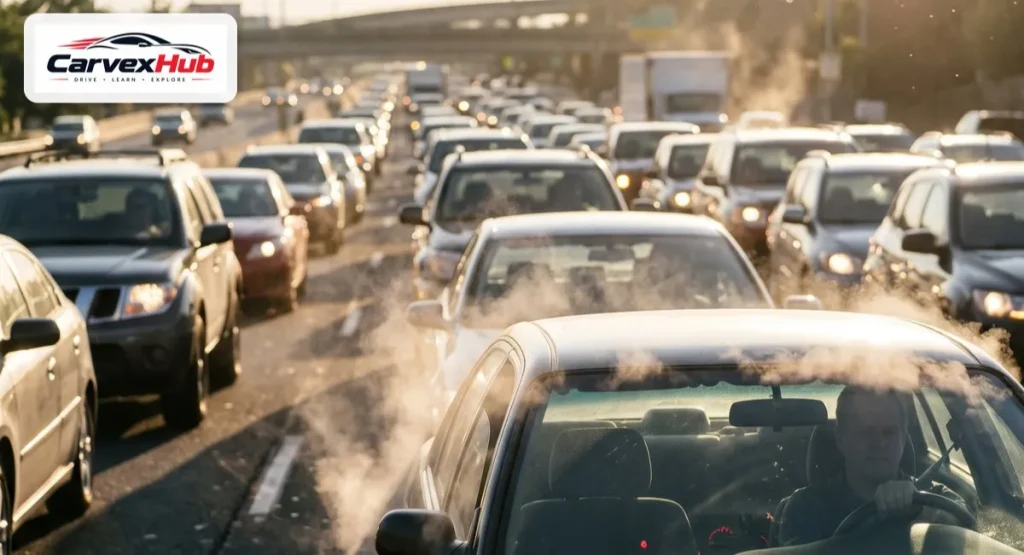
Why Does Your Car Overheat in Traffic but Not on the Highway?
If your car overheats in traffic but maintains normal temperature on the highway, a radiator fan problem may be responsible.
At higher speeds, natural airflow helps cool the radiator. During slow driving or idling, the radiator fan provides much of the airflow needed to release heat.
Other possible causes include low coolant, a clogged radiator, or a failing water pump. Have the cooling system inspected if this happens repeatedly.
Why Is Your Car Overheating but Coolant Is Full?
A full coolant reservoir does not guarantee that the cooling system is working correctly.
A stuck thermostat may prevent proper coolant circulation. A failing water pump or clogged radiator can also prevent effective heat transfer.
Other possibilities include trapped air in the cooling system or a damaged head gasket. A mechanic can perform pressure and circulation tests to identify the actual problem.
Can You Drive a Car When It Is Overheating?
No, Driving with a very hot engine can cause serious problems.
Excessive heat may warp the cylinder head, damage the head gasket, affect engine oil, or lead to complete engine failure.
If the temperature gauge reaches the red zone, pull over safely and turn off the engine. Do not risk driving to your destination.
If the temperature warning returns after cooling, arrange professional assistance.
How to Prevent Car Overheating in Hot Weather
Regular maintenance can reduce the chances of engine overheating, especially during summer driving and long road trips.
Check Coolant Levels Regularly
Inspect the coolant reservoir when the engine is cold. Use the coolant type recommended in your owner’s manual.
Inspect Hoses and Belts
Look for cracked hoses, loose connections, and worn drive belts that could affect cooling system operation.
Maintain the Radiator
Keep the radiator exterior free from dirt and debris that restrict airflow. Follow the manufacturer’s recommendations for cooling system service.
Monitor Engine Oil
Check the engine oil regularly and keep it at the recommended level. Change it according to your vehicle’s maintenance schedule. Following the correct service interval is important for engine protection. Check our guide on how often you should change your car oil in 2026.
Prepare Before a Summer Road Trip
Before highway travel, inspect coolant levels, hoses, belts, and visible radiator components. Address existing overheating symptoms before starting a long journey. Before a long road trip, make sure your tires are suitable for your vehicle. Learn what the numbers on tires mean before choosing replacement tires. You can also explore our complete car tire types, reviews, buying guide, and maintenance tips. Brakes are another important part of vehicle safety. Read our guide explaining how car brakes work and how their main components function.
Final Thoughts on Car Overheating
Car overheating is a serious problem that should never be ignored. Low coolant, radiator issues, a faulty thermostat, and water pump failure can all affect engine temperature.
Pay attention to dashboard warnings, inspect fluid levels regularly, and maintain your cooling system. If your engine overheats, stop safely and arrange professional help rather than risking further damage.
For more practical car engine troubleshooting and maintenance advice, explore other helpful guides at CarvexHub.
Frequently Asked Questions About Car Overheating
How Long Does It Take for an Engine to Cool Down?
An overheated engine may need 30 minutes or longer to cool completely. The time depends on outside temperature and the severity of overheating.
Can Low Engine Oil Cause a Car to Overheat?
Yes. Low engine oil increases friction between moving parts and can contribute to excessive engine heat.
Can a Bad Thermostat Cause Engine Overheating?
Yes. A thermostat stuck closed can restrict coolant circulation and cause engine temperature to rise.
Is It Safe to Pour Water Into an Overheated Engine?
Never pour cold water directly onto a hot engine or open a hot radiator cap. Wait until the cooling system is completely cool and follow your manufacturer’s coolant recommendations.
What Happens If You Keep Driving an Overheated Car?
Continued driving can damage the head gasket, warp the cylinder head, and potentially destroy the engine.
