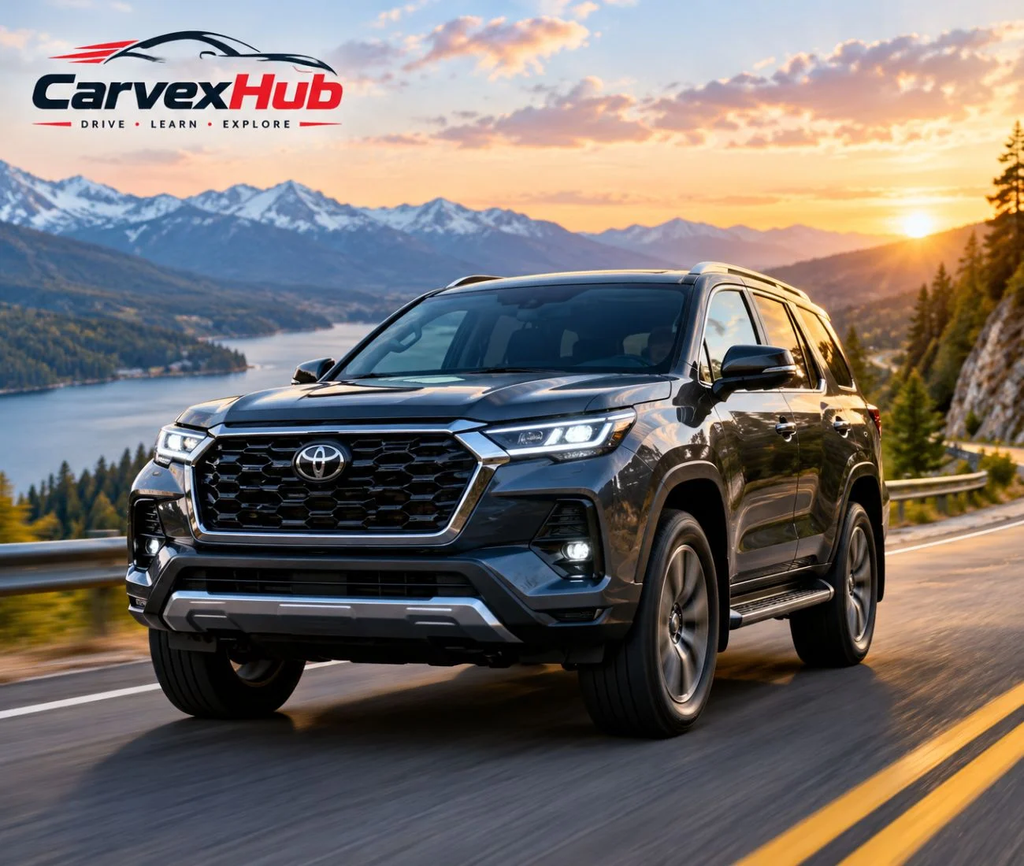
SUVs have become a popular choice for drivers who want a practical vehicle that can handle everyday travel, family trips, and longer journeys. With their spacious cabins, flexible cargo areas, and elevated driving position, SUVs offer a useful combination of comfort and versatility. Today, buyers can choose from compact SUVs, midsize models, and larger vehicles designed for families or towing.
Some models also offer all-wheel drive, making them suitable for drivers who regularly face challenging road conditions. However, choosing the right SUV involves more than looking at its size or appearance. Factors such as fuel economy, safety, reliability, and ownership costs can make a significant difference. Understanding these features can help you choose an SUV that fits your lifestyle.
What is SUV?
SUV stands for Sport Utility Vehicle. It is a type of vehicle designed to offer more practicality and interior space than many traditional passenger cars.Most of the SUVs have a higher seating position, giving the driver a more elevated view of the road. Many also provide flexible cargo space and folding rear seats.Modern SUVs range from comfortable city vehicles to rugged models designed for demanding terrain.
Why SUVs Are So Popular?
One of the biggest reasons for the popularity of SUVs is their versatility. A single SUV can handle commuting, family trips, shopping, and long-distance travel.The higher seating position is another attraction. Many drivers like the wider view of traffic and the easier entry and exit.SUVs also come in many sizes. That means buyers can choose a small model for city driving or a larger one when they need more passenger and cargo space.
Different Types of SUVs
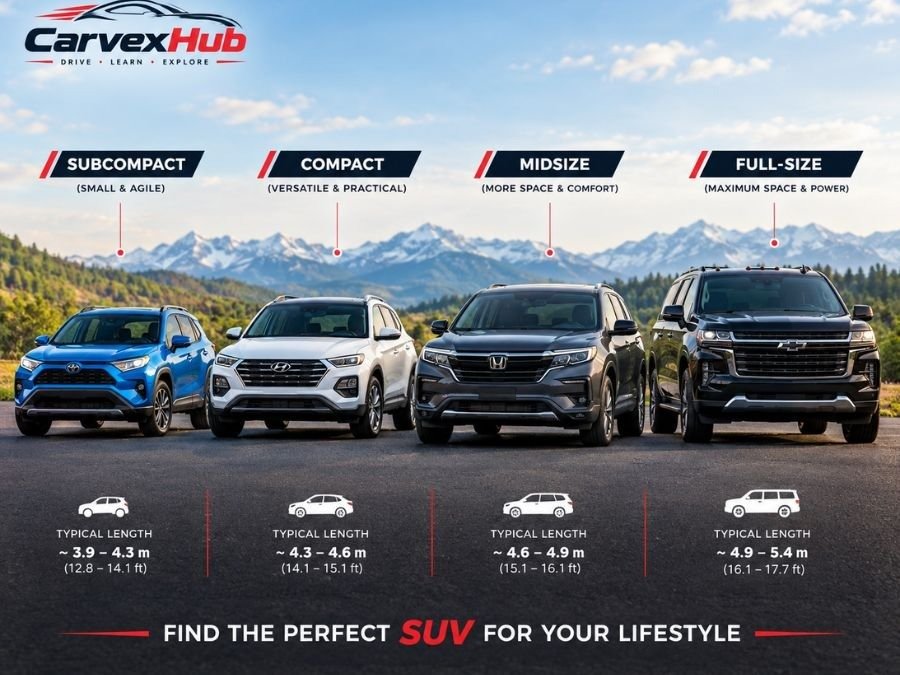
SUVs are not all the same. Their size, interior space, performance, and price may vary significantly.Understanding the main SUV categories makes it easier to find a vehicle that matches your needs.
Subcompact SUVs
Subcompact SUVs are the smallest type of SUV. They are designed for buyers .Their compact dimensions make them easier to drive and park in busy areas. They can be a good choice for individuals, couples, and small families.The main limitation is space. Rear-seat room and cargo capacity may be more restricted than in larger SUVs.
Compact SUVs
They usually provide enough room for passengers and luggage while remaining relatively easy to handle.This makes them popular with small families and daily commuters. They can work well in both city and highway driving.For many buyers, a compact SUV is a practical middle ground between a small car and a larger family SUV.
Midsize SUVs
Midsize SUVs provide more interior and cargo space than compact models. Many are also available with stronger engines and additional comfort features.Some midsize SUVs offer three rows of seating. This can be useful for families who regularly carry more passengers.The trade-off is a larger exterior size, which can make parking and maneuvering more challenging.
Full-Size SUVs
These SUVs are built for who need cargo facility.Some models also provide powerful engines and high towing capacities. This makes them useful for drivers with demanding transportation or towing needs.
What Are the Main Benefits of SUVs?
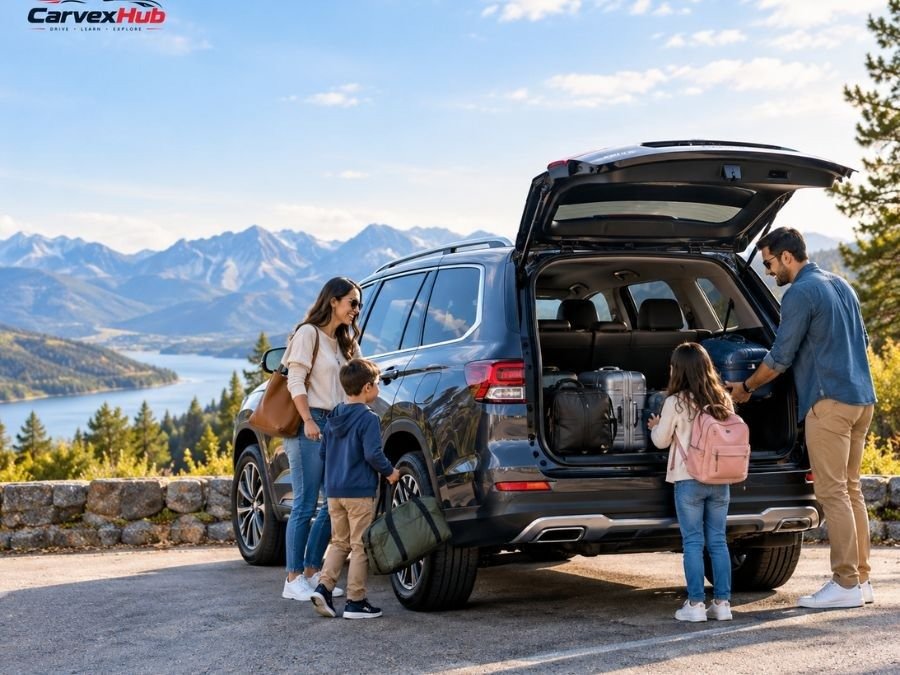
SUVs have several qualities that make them attractive to modern drivers.
More Interior Space
Most SUVs offer useful passenger and cargo space. Folding rear seats can provide even more room when you need to carry larger items.This flexibility can be useful for families, travelers, and peoples.
Higher Driving Position
An SUV usually places the driver higher than a conventional sedan.This can provide a commanding view of surrounding traffic and make it easier for some drivers to see vehicles around them.
Flexible Cargo Area
SUVs generally have a large rear cargo opening. A flexible cargo area can be one of the biggest advantages over a traditional sedan.
Available AWD and 4WD
Some SUVs are four-wheel drive. These systems can provide additional traction in certain road and weather conditions.However, AWD or 4WD is not necessary for every driver. It can also add weight and sometimes additional fuel consumption.
Wide Range of Choices
There is an SUV for almost every type of buyer.You can find small, efficient models, comfortable family SUVs, luxury vehicles, powerful off-roaders, and large three-row models.
What Are the Disadvantages of SUVs?
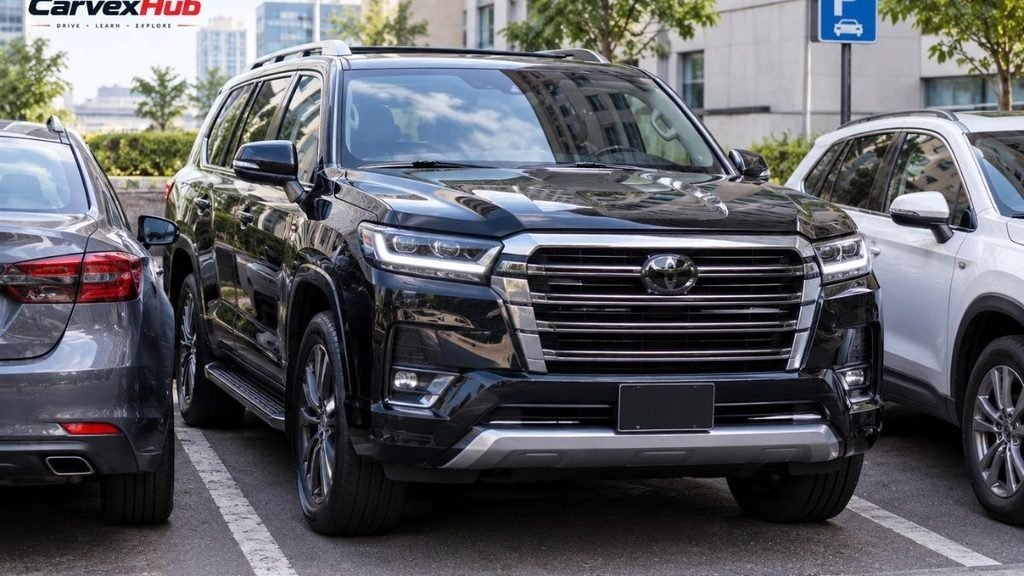
SUVs also have drawbacks. Understanding them to make a decision of buying a SUVs.
Higher Fuel Consumption
Larger and heavier SUVs can use more fuel than smaller cars.If most of your driving is in the city, fuel economy should be an important part of your buying decision.
Larger Size
A large SUV can be difficult to maneuver in narrow streets and crowded parking areas.If you regularly drive in busy urban environments, a compact SUV may be easier to live with.
Higher Ownership Costs
Some SUVs can cost more to purchase, insure, maintain, and repair.Large tires, bigger engines, and specialized components can increase ownership expenses on certain models.
You May Not Need the Extra Space
More space sounds useful, but you may not actually need it.If you normally drive alone or with one passenger, a smaller SUV or sedan could provide everything you need at a lower cost.
What Should You Consider Before Buying a SUV?
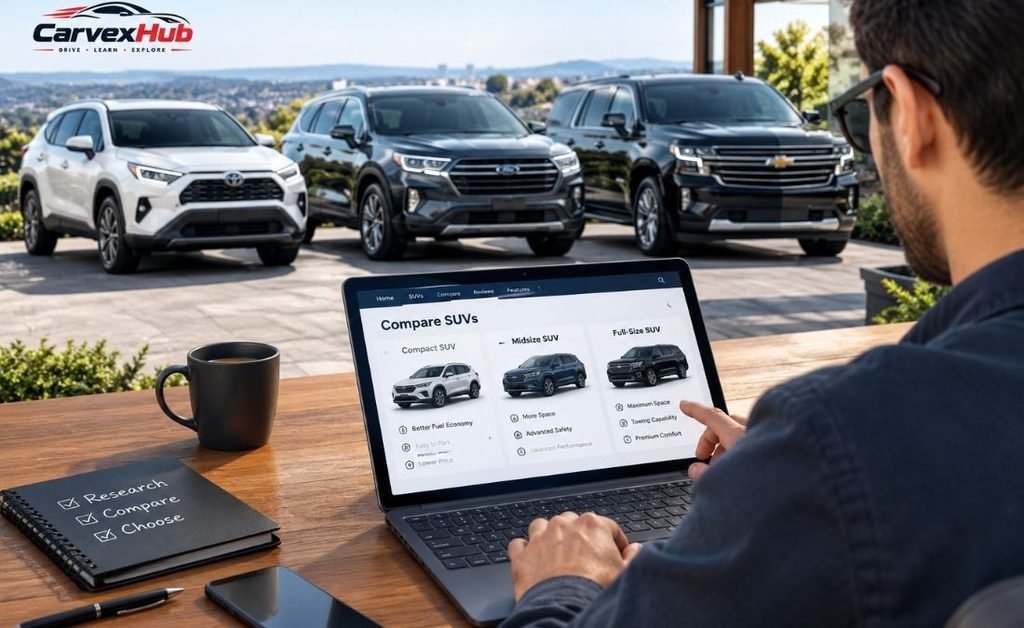
Buying an SUV should start with your needs rather than the vehicle’s appearance.Ask yourself how many people you normally carry, how much cargo you need, and where you drive most often. Before choosing a model, read our new car reviews to learn what to look for in a vehicle’s features, comfort, safety, and fuel economy.
Set Your Budget
Start with your total ownership budget, not just the purchase price.But consider fuel, insurance, maintenance, tires, registration, and possible repair costs also..A cheaper SUV to buy may not always be cheaper to own over several years.
Choose the Right SUV Size
Think about your regular passenger needs.A subcompact or compact SUV may be enough for a small household, while larger families may need a midsize or three-row SUV.Choosing the smallest SUV that comfortably meets your needs can help control running costs.
Check Fuel Economy
Fuel economy matters because you will pay for fuel throughout the vehicle’s life.Compare the expected fuel efficiency of different models before making a decision.If you drive many miles each week, even a small difference in fuel economy can become significant over time.
Look at Safety Features
Safety should be a major consideration when comparing SUVs.Depending on the model and market, useful features may include:
- Automatic emergency braking
- Lane-departure warning
- Blind-spot monitoring
- Adaptive cruise control
- Parking sensors or cameras
- Lane-keeping assistance
- Do not judge safety by features alone. Consider the vehicle’s overall safety performance.
Consider Performance
Think about what you actually expect from the SUV.If your driving is mostly commuting and family transportation, you may not need a powerful engine.If you regularly tow, carry heavy loads, or travel on challenging roads, stronger performance may be more important.
Check Reliability and Maintenance
A vehicle can be expensive if it frequently needs repairs.Before buying, research the model’s reliability reputation, warranty coverage, maintenance requirements, and availability of replacement parts.These factors can have a major effect on long-term ownership costs.
Are SUVs Good for Families?
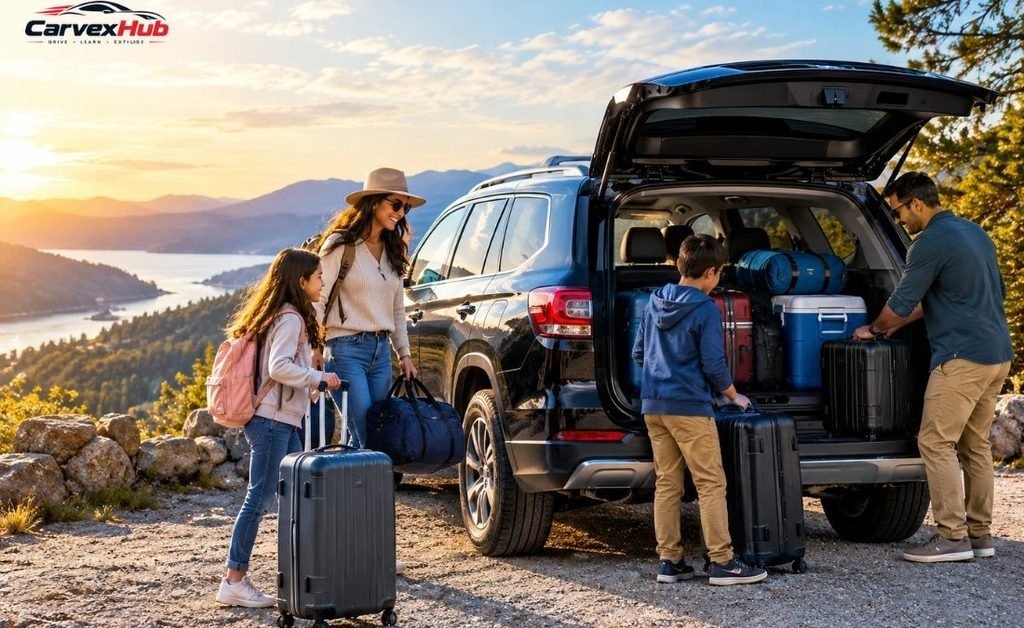
SUVs can be excellent family vehicles because they combine passenger space with useful cargo capacity.The extra room can make it easier to carry children, luggage, groceries, and everyday family equipment.But size alone does not make an SUV family-friendly.Parents should check rear-seat space, child-seat compatibility, third-row access, storage compartments, and safety equipment before buying.
SUV vs Sedan: Which Is Better?
The better choice depends on your lifestyle.An SUV may better if you need extra cargo space, a higher seating position, flexible seating, A sedan can be a better option if you prefer a smaller vehicle, lower driving position, easier maneuverability, or potentially lower running costs.Neither vehicle type is automatically better. Your daily needs should decide it.
Is an SUV Good for City Driving?
Yes, but the right size matters.A compact SUV can be easy to use in urban environment.A full-size SUV may be less convenient in crowded cities because of its larger dimensions.If city driving is your main use, consider visibility, turning radius, parking space, and fuel economy before choosing a model.
Are SUVs Good for Long Trips?
SUVs can be excellent for road trips. Their comfortable seating, cargo capacity, and flexible interiors make them useful for carrying passengers and luggage.A midsize SUV can offer a good balance between highway comfort and manageable size.For frequent long-distance driving, also consider seat comfort, cabin noise, fuel economy, storage space, and driver-assistance features.
Do You Need AWD or 4WD?
Not every SUV needs all-wheel drive or four-wheel drive.If you mainly drive on paved roads in normal conditions, a two-wheel-drive model may be perfectly suitable.AWD or 4WD becomes more useful when you regularly face snow, slippery roads, rough terrain, or specific towing requirements.Remember that these systems do not make a vehicle invincible. Tires, road conditions, and responsible driving still matter.
How to Choose the Right SUV
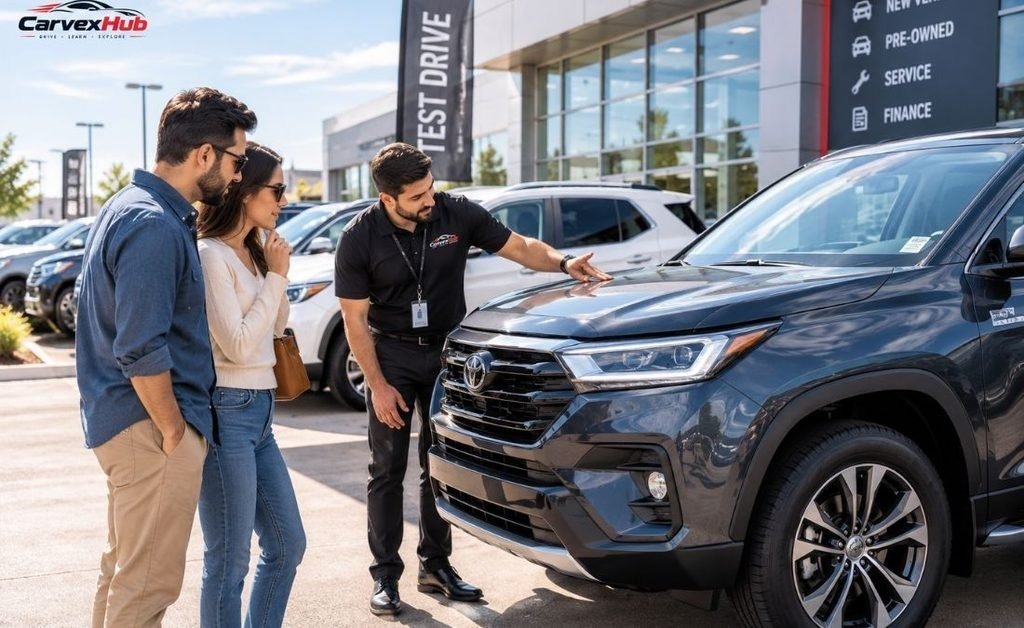
Start by identifying your main reason for buying an SUV.Do you need more space? Better road visibility? Family practicality? Towing ability? Or simply a comfortable vehicle for everyday driving?Once you know your priorities, compare SUVs based on:
- Price
- Size
- Fuel economy
- Safety
- Reliability
- Cargo space
- Passenger room
- Performance
- Maintenance costs
- Available features
Common SUV Buying Mistakes
One common mistake is buying a larger SUV than necessary.A bigger vehicle can look attractive, but its additional fuel consumption and maintenance charges effect the buyer..Another mistake is focusing only on the monthly payment. Always consider the complete cost of a SUV.Finally, do not choose an SUV based only on appearance. A vehicle that looks impressive may not be the best match for your driving needs.
Final Thoughts
SUVs offer a useful combination of space, comfort, practicality, and versatility. That makes them appealing to families, commuters, travelers, and many other types of drivers.But the best SUV is not necessarily the biggest, fastest, or most expensive model.
The right choice is the SUV that fits your budget, lifestyle, passenger needs, driving conditions, and long-term ownership plans.Take time to compare different models, understand their strengths and weaknesses, and take your preferred choices for a test drive before making the final decision.
Frequently Asked Questions
What does SUV stand for?
SUV stands for Sport Utility Vehicle. SUVs are generally designed to provide a combination of passenger space, cargo flexibility, and a higher driving position.
Which SUV size is best for a small family?
A compact SUV can be a good choice for a small family. It usually provides useful passenger and cargo space without the size of a large SUV.
Are SUVs expensive to maintain?
Maintenance costs depend on the model. Larger SUVs, powerful engines, expensive tires, and complex systems can increase ownership costs.
Is AWD necessary on an SUV?
No. AWD is useful in certain conditions, but many drivers can comfortably use a two-wheel-drive SUV for normal city and highway driving.
Are SUVs better than sedans?
Not necessarily. SUVs offer more space and versatility, while sedans can be smaller, easier to maneuver, and potentially more economical.
What should I check during an SUV test drive?
Check seating comfort, visibility, steering, braking, ride quality, cabin noise, technology, cargo access, and parking visibility.
