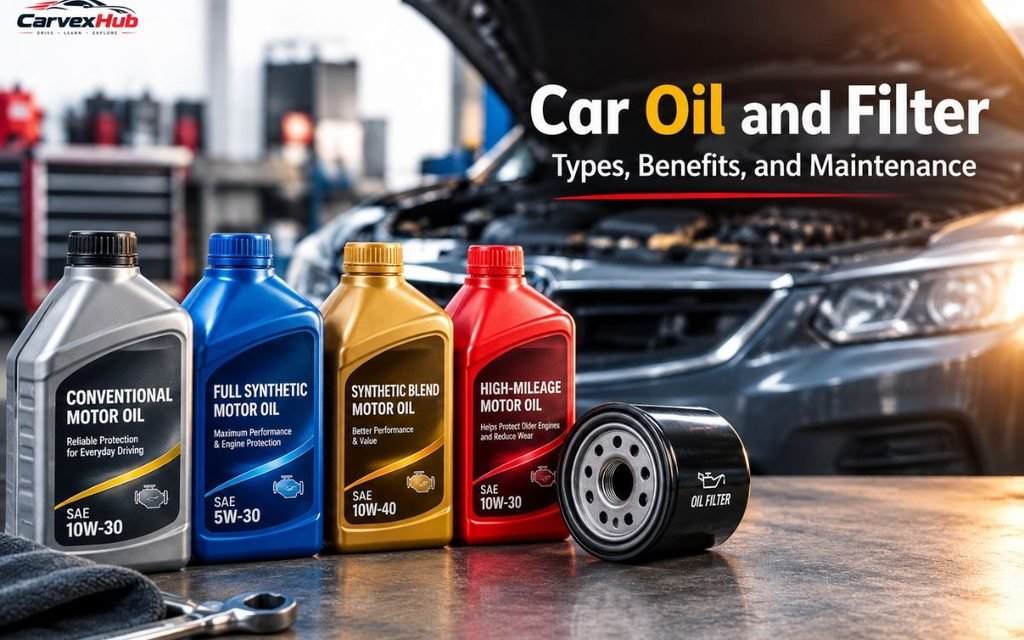
Keeping your car in good condition starts with proper engine care, and oil and filter maintenance plays an important role in that process. Engine oil helps reduce friction, control heat, and protect moving parts from excessive wear. Meanwhile, an oil filter traps dirt, metal particles, and other contaminants that can affect engine performance. Choosing the right engine oil and replacing it at the recommended interval can help extend engine life and support reliable driving.
Whether you own a new vehicle or a high-mileage car, understanding oil change intervals and basic maintenance can help you avoid unnecessary repairs and keep your engine running smoothly.
What Are Car Oil and Oil Filter?
Oil is a lubricant that runs through the engine to reduce friction between moving parts. It also helps carry away heat and keeps deposits from building up inside the engine.
An oil filter cleans the oil by trapping contaminants before they can continue circulating through the lubrication system. Over time, the filter collects particles and needs replacement.
Think of engine oil as the protective layer between moving engine parts and the oil filter as a cleaning system that helps keep that oil free from harmful debris.
Both components work together. Fresh oil cannot provide its full benefit if the filter is neglected, and a new filter cannot compensate for oil that has degraded beyond its service life.
Why Your Car Needs Engine Oil and a Filter
Your car engine contains many moving parts, including pistons, bearings, and the crankshaft. These components operate under heat and pressure, so proper lubrication is essential. To understand how the engine works and how to maintain it properly, read our complete guide to car engine operation and maintenance.
Here are the benefits of engine oil and oil filter:
- Reduces friction: Creates a lubricating film between moving metal surfaces.
- Carries heat away from engine components.
- Removes contaminants: Helps suspend dirt and tiny particles so the filter can capture them.
- Protects engine parts: Helps reduce wear during normal operation.
- Controls deposits: Detergents and other additives help prevent harmful sludge and deposits.
- Supports engine efficiency: Proper lubrication helps the engine operate as designed.
For example, a driver who regularly checks oil levels and follows the recommended service schedule is more likely to catch a problem before it causes serious damage. Routine maintenance cannot prevent every failure, but it can reduce avoidable risks.
Different Types of Engine Oil.
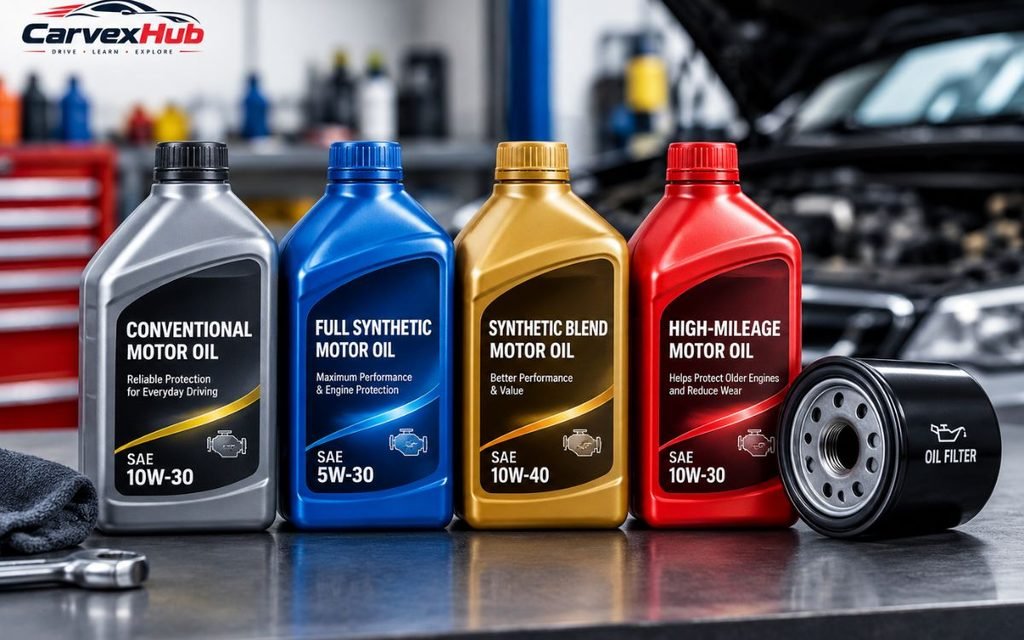
Not all motor oils are the same. The right choice depends on your engine design, mileage.
Image placement idea: Show four motor oil containers representing different oil types, with a small oil filter beside them.
| Oil type | Main characteristics | Common use |
| Conventional oil | Traditional refined base oil with performance additives | Vehicles whose specifications permit it |
| Full synthetic oil | Formulated for consistent performance and demanding conditions | Many modern engines requiring synthetic oil |
| Synthetic blend | Combines conventional and synthetic base oils | Vehicles whose specifications allow a blend |
| High-mileage oil | Formulated for the needs of some older, higher-mileage engines | Suitable older vehicles, depending on specifications |
Conventional Motor Oil
Conventional oil is a traditional option for engines designed to use it. It can provide suitable lubrication when it meets the required specifications and is changed on schedule.
It may be less suitable for some newer engines that specifically require synthetic oil.
Full Synthetic Oil
Full synthetic oil is formulated to deliver performance across a range of operating temperatures and conditions. Depending on the product, it may provide benefits such as better resistance to oxidation and deposit formation.
However, synthetic oil is not automatically the correct choice for every vehicle. Always check the manufacturer’s requirements.
Synthetic Blend Oil
Synthetic blend oil is the combination of conventional and synthetic base oils. It can offer a balance of performance and cost, provided it meets the engine’s required specifications.
High-Mileage Oil
High-mileage oils are used for older engines. Some formulations include additives intended to help manage seals and deposits.
Important: Mileage alone does not determine which oil your vehicle needs.
How Does an Oil Filter Work?
An oil filter allows engine oil to pass through specialized filtering material that captures contaminants. The cleaned oil then moves through the lubrication system.
Most conventional automotive oil filters contain several key components:
- Filter media: Traps particles suspended in the oil.
- Outer housing: Protects the filter components.
- Sealing gasket: Helps prevent oil from leaking where the filter connects to the engine.
- Bypass valve: In designs equipped with one, allows oil to continue flowing if the filter becomes restricted or the oil is too difficult to pass through the media under certain conditions.
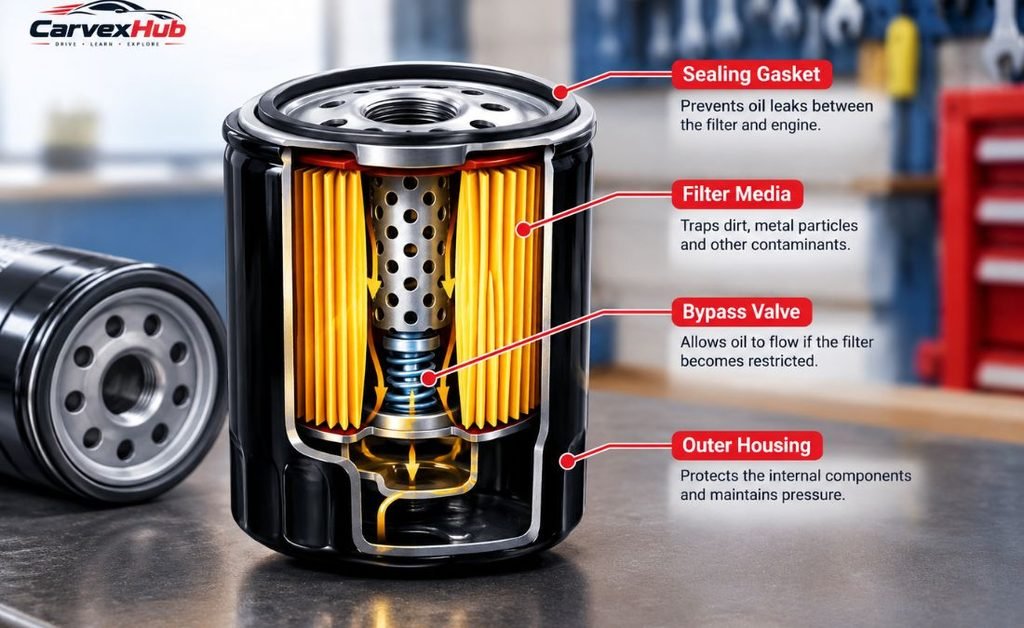
A bypass valve helps maintain oil flow, but it does not mean a clogged filter is harmless. Restricted filtration can compromise normal operation, which is why timely replacement matters.
Some vehicles use cartridge-style filters rather than traditional spin-on filters. The correct filter design and specification depend on your vehicle.
Signs of a Dirty Oil Filter or Old Engine Oil.
Engine oil gradually degrades as it experiences heat, oxidation, and contamination. A filter also collects particles as the vehicle operates.
Watch for these possible warning signs:
- Oil warning light: May indicate dangerously low oil pressure. Stop safely and follow the vehicle’s instructions rather than continuing to drive.
- Unusual engine noise: Knocking, ticking, or other new noises may indicate a lubrication problem or another engine issue.
- Oil level below the recommended range: Could result from a leak or oil consumption.
- Visible oil leaks: May come from a filter gasket, drain plug, seal, or another component.
- Maintenance reminder: Indicates that the vehicle may be due for scheduled service.
- Unusual oil appearance: Sludge, a milky appearance, or other changes can indicate a problem requiring investigation.

Dark oil alone does not prove that the oil needs immediate replacement. Oil can change colour as it collects contaminants.
Likewise, these symptoms do not automatically mean the oil filter is clogged. If an oil-pressure warning appears, treat it seriously and arrange professional diagnosis when necessary.
Time to Change Your Car Oil and Filter.
There is no single oil change interval that works for every car. This change varies according to the vehicle, engine design, oil specification, driving conditions, and monitoring system.
Some vehicles can go much longer between oil changes than older cars, so relying on a universal 3,000-mile rule may lead to unnecessary service.
Check your owner’s manual for:
- The recommended oil change mileage .
- The service schedule for severe driving conditions.
- The recommended oil filter replacement interval.

Frequent short trips, heavy stop-and-go traffic, towing, dusty environments, and extreme temperatures can affect maintenance needs, depending on the vehicle. If you drive an SUV, our complete SUV buying guide explains important factors such as fuel economy, vehicle size, and ownership costs.
Practical example: If your vehicle’s manual specifies an oil change at a particular mileage or time, track both. Even if you drive very little, the time-based service requirement may still apply.
Both the oil filter and the engine oil changed together.
How to Choose the Right Engine Oil and Oil Filter
Choosing engine oil involves more than picking a popular brand or the cheapest bottle on the shelf. When comparing vehicles before buying, read our guide to new car reviews to learn which features and ownership factors are worth considering.

Understand Oil Viscosity
Oil viscosity describes how readily oil flows under different temperatures. Common grades include 0W-20, 5W-30, and 10W-30.
In a multigrade oil such as 5W-30, the “W” refers to winter performance. The numbers indicate how the oil behaves under standardized temperature conditions.
These grades are not interchangeable just because they are widely available. Use the viscosity recommended for your specific engine.
Check Oil Quality Specifications
Look for the performance specifications required by the manufacturer. The American Petroleum Institute (API) provides consumer guidance on engine oil quality marks and service categories.
API
+1
Use a Compatible Oil Filter
Check the filter’s part number and vehicle compatibility. A filter that physically fits may not work properly until filter has the same number.:
- Confirm your vehicle’s year, make, model, and engine.
- Check the recommended viscosity and oil performance standard.
- Select a compatible oil filter.
- Follow the manufacturer’s oil capacity and maintenance instructions.
- Choose products from reliable suppliers.
How to Change Engine Oil and an Oil Filter
engine oil is changing with the help of right tools and experienced staff . However, vehicle designs vary, so consult the service manual before starting.

- Prepare the vehicle: Park on a level surface, switch off the engine, and follow the service manual’s instructions. Allow hot components and oil to cool down.
- Gather supplies: Obtain the correct engine oil, compatible filter, drain pan, suitable tools, and any required replacement gasket or drain-plug washer.
- Secure the vehicle: If access underneath is necessary, use appropriately rated jack stands on a suitable surface. Never rely on a jack alone.
- Drain the old oil: Position the drain pan and carefully remove the drain plug according to the service instructions.
- Replace the old oil filterwith new one.
- Reinstall the drain plug: Use the correct washer if required and follow the specified tightening torque.
- Add fresh oil: Pour in the recommended oil, using the specified capacity as a guide.
- Check the level and leaks: Follow the manufacturer’s procedure to verify the oil level. Start the engine only when it is safe to do so, check for leaks, and recheck the level as directed.
Never crawl under an inadequately supported vehicle. Used motor oil should be collected in a sealed, suitable container and taken to an appropriate recycling or collection facility.
If you are unsure about the procedure, a qualified mechanic can complete the oil and filter change safely.
Common Oil and Oil Filter Maintenance Mistakes
Even a well-maintained car can develop problems if basic oil maintenance is overlooked. Avoid these common mistakes:
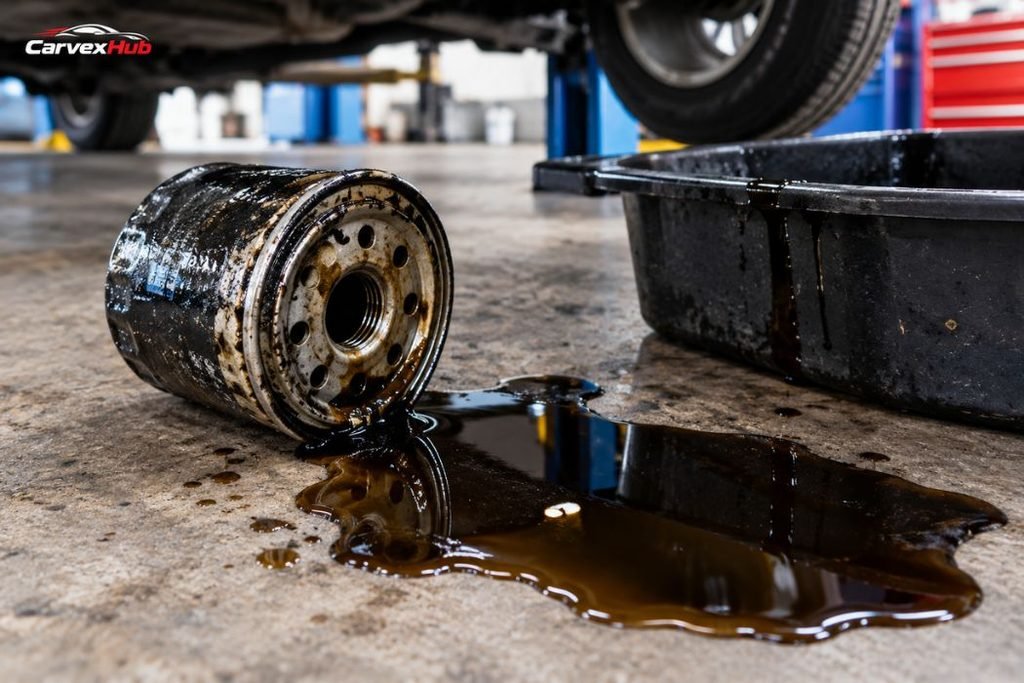
- Delaying oil changes: Old oil can lose some of its protective properties and contribute to deposits and engine wear.
- Using the wrong oil grade: Incorrect viscosity or performance specifications may affect lubrication and engine operation.
- Choosing an incompatible filter: A poorly matched filter may not seal correctly or perform as required.
- Overtightening the oil filter: Excessive tightening can damage the filter, gasket, or housing.
- Ignoring warning lights: An oil-pressure warning can indicate a serious problem that requires immediate attention.
- Overfilling the engine: Too much oil can also cause problems. Follow the specified oil capacity and level-checking procedure.
- Disposing of used oil improperly: Never pour used motor oil onto the ground or into a storm drain.
A simple maintenance log can help you track oil changes, mileage, filter replacements, and any issues noticed between services.
Final Thoughts on Car Oil and Filter Maintenance

Engine oil and the oil filter are small parts of a much larger system, but both play an essential role in protecting your engine. Using the correct oil, replacing the filter as recommended, and checking oil levels regularly can help keep your vehicle running as intended.
For drivers in the United States, the best approach is simple: follow your owner’s manual, pay attention to warning lights, and never ignore signs of an oil leak or lubrication problem.
Consistent maintenance can help reduce avoidable engine wear and support dependable performance over the life of your car. If you are unsure which oil or filter your vehicle needs, consult the manufacturer’s recommendations or ask a qualified mechanic.
Frequently Asked Questions About Car Oil and Filters
Can you change engine oil without changing the oil filter?
Yes, it is mechanically possible, but replacing the filter with the oil is common practice and recommended for many vehicles. Follow your vahicale’s manual
Can a clogged oil filter damage an engine?
The wrong viscosity or performance specification may reduce protection or affect engine operation. Always usecompatible oil..
Can a clogged oil filter damage an engine?
A severely restricted filter can interfere with normal filtration and oil flow. Some filters have bypass valves, but these do not eliminate the risks associated with neglected maintenance.
Is full synthetic oil better than conventional oil?
Full synthetic oil can offer advantages in certain operating conditions, but the best choice depends on your engine’s requirements. Conventional oil remains suitable for vehicles whose specifications permit it.
How can you tell when your car needs an oil change?
Check the maintenance reminder, oil-life monitor, mileage, and service history. Unusual engine noises or warning lights require attention, but they are not reliable substitutes for scheduled maintenance.
