
Car tires are essential for your vehicle’s safety, comfort, and performance. They help your car accelerate, turn, and stop safely on different road surfaces. Choosing the right car tires can improve handling, support fuel efficiency, and provide a smoother driving experience. However, selecting the wrong tires may reduce traction and affect vehicle stability in changing weather conditions.
Understanding tire types, tire tread, and tire pressure can help you make smarter buying decisions. Whether you drive a sedan, SUV, or pickup truck, this guide explains how to choose the best tires, compare popular brands, identify common problems, and follow simple maintenance practices to extend tire life .
1. What Are Car Tires and How Do They Work?
Car tires are rubber components fitted around wheels. They connect your vehicle to the road and support its weight. They also help the vehicle accelerate, turn, and stop safely. Good tires provide reliable tire grip, stable handling, and a comfortable ride. Their performance depends on rubber compounds, tread design, tire pressure, road conditions, and temperature. Tires are only one part of vehicle maintenance. Learn more about engine care and routine servicing in our guide to car engine operation and maintenance.
Main Parts of a Car Tire.
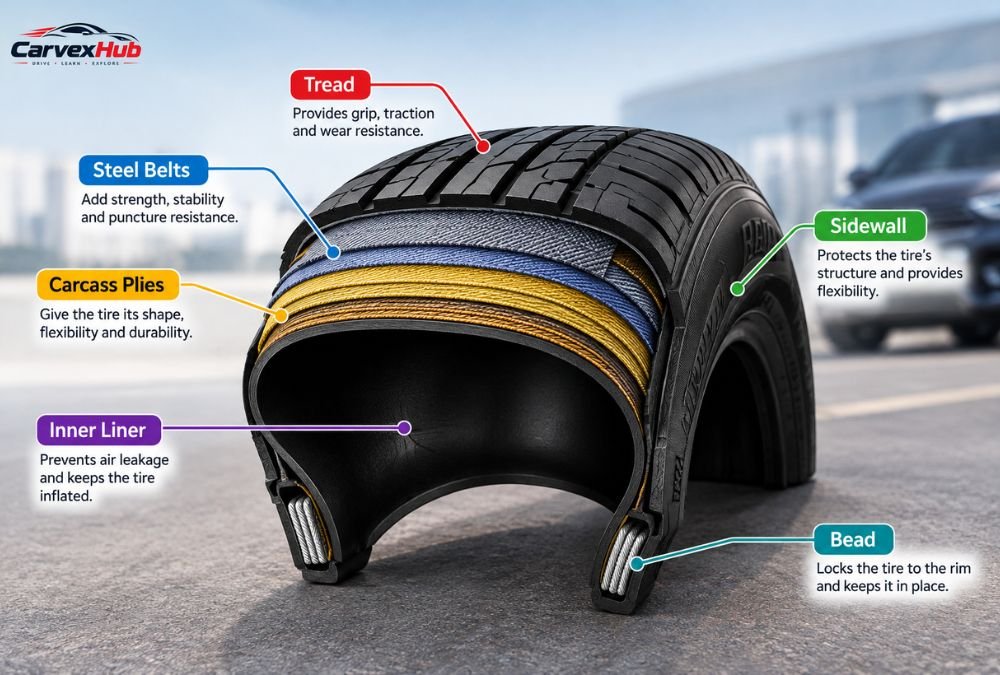
A tire contains several important parts. The tire tread touches the road and provides traction. Tread grooves help move water away from the contact area. The tire sidewall supports the tire’s shape and displays information such as size, load index, and speed rating. The tire bead holds it securely against the wheel. Internal belts and casing materials provide strength and stability.
The design of each component affects tire performance. For example, deeper tread grooves can help manage water and loose surfaces. Strong sidewalls may support heavier loads, while flexible sidewalls can improve ride comfort. However, tire design involves trade-offs, so drivers should choose tires that match their vehicle and driving needs.
How Do Car Tires Provide Grip and Traction?
Tires create grip through contact between their rubber compounds and the road surface. The tread pattern also helps manage water, snow, and loose material. On wet roads, suitable tread grooves can reduce the risk of hydroplaning. On snow and ice, specialized winter tire traction comes from tread design and rubber compounds made for low temperatures.
Tire pressure also affects the size and shape of the contact patch. Underinflated or overinflated tires can change handling, braking, and wear patterns. Following the vehicle manufacturer’s recommended pressure.
What Do Tire Numbers and Letters Mean?
The markings on a tire explain its size and performance specifications. Consider this example: P215/65R16 98H. The letter P indicates a passenger tire. The number 215 represents the width in millimeters. The number 65 is the aspect ratio, while R means radial construction. The number 16 identifies the wheel diameter in inches.
The load index and speed rating describe additional limits. Always check your vehicle’s door-jamb placard or owner’s manual before choosing replacement tires. A tire that looks suitable may still have an incorrect size or load rating.
2. What Are the Different Types of Car Tires?

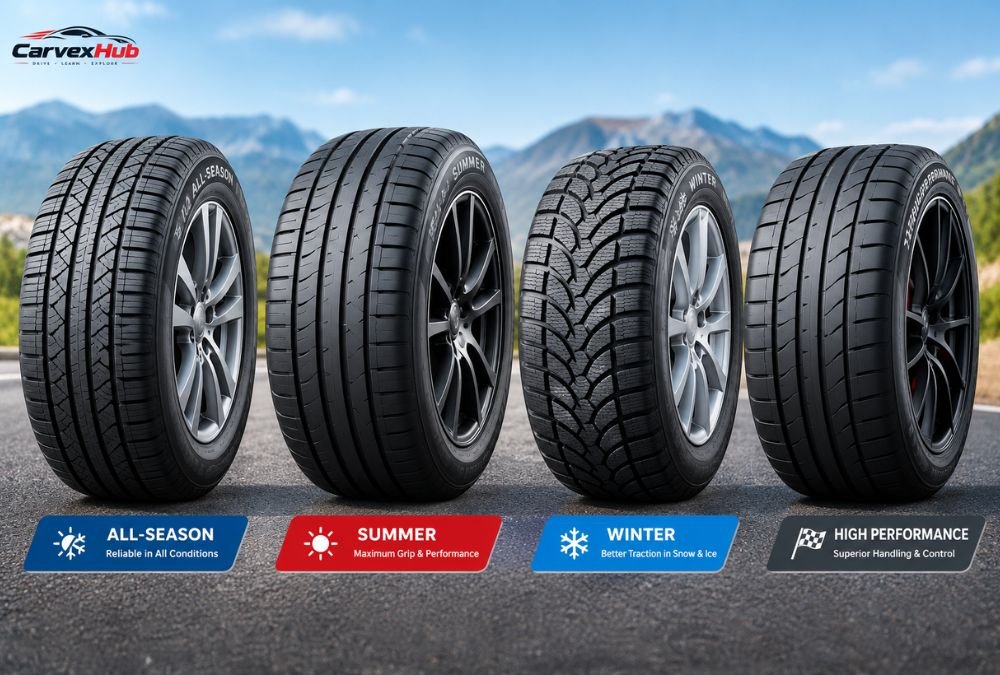
Different car tire types are designed for different weather conditions, road surfaces, and driving styles. All-season tires suit many everyday drivers in moderate climates. Summer tires focus on warm-weather performance, while winter tires use specialized compounds and tread patterns for cold conditions. All-terrain and mud-terrain tires serve drivers who travel on unpaved roads or challenging off-road surfaces.
Choosing the correct tire type can improve safety and comfort. A tire that performs well in hot weather may not offer suitable traction on snow and ice. Similarly, an aggressive off-road tire may create more road noise during highway driving. Understanding these differences helps you select tires that fit your regular driving conditions.
Comparison of Common Car Tire Types
| Tire type | Best use | Main consideration |
| All-season tires | Everyday driving in moderate conditions | Limited performance in severe winter weather |
| All-weather tires | Mixed climates with occasional winter conditions | Performance varies by model |
| Summer tires | Warm weather and performance driving | Unsuitable for snow and ice |
| Winter tires | Cold temperatures, snow, and ice | Wear faster in warm conditions |
| All-terrain tires | Highway and off-road use | May produce more noise |
| Mud-terrain tires | Challenging off-road conditions | Less comfortable on paved roads |
| Touring tires | Comfortable daily and highway driving | Not designed for every extreme condition |
| Run-flat tires | Selected vehicles designed for run-flat use | Can cost more and ride more firmly |
What Are Winter Tires Made For?
Winter tires are designed for cold weather, snow, and icy roads. Their specialized rubber compounds remain more flexible at low temperatures than many standard all-season compounds. This flexibility helps maintain contact with the road and supports traction during cold-weather driving.
Many winter tires also carry the 3PMSF symbol, which stands for Three-Peak Mountain Snowflake. This symbol indicates that a tire meets all the requirements. Studded tires use small metal studs for additional grip on ice where permitted. Non-studded winter tires rely on specialized compounds, tread patterns, and biting edges. The right choice depends on local conditions and regulations.
3. How to Choose the Best Tires.
The best car tires are not necessarily the most expensive ones. They are the tires that match your vehicle specifications, driving habits, climate, and budget. A commuter who mainly drives on highways may value comfort and low road noise. A pickup truck owner who frequently travels on gravel roads may need a different tread design and load capacity.
First of all check your tire size and then compare traction, treadwear warranty, ride comfort, fuel efficiency, and total installation costs. Reading professional tire tests and verified customer reviews can help you understand how different models perform in real conditions. If you are comparing vehicles before making a purchase, read our guide to new car reviews and what buyers should know to evaluate important features and ownership considerations.
What Should You Check Before Buying Car Tires?

Your vehicle’s tire manual provides important information about tires. These include the correct tire size and recommended pressure. You also check the required load index and speed rating. For trucks and some SUVs, load capacity is particularly important because the vehicle may carry passengers, cargo, or towing loads. If you drive an SUV, explore our complete SUV buying guide to understand vehicle size, practicality, and ownership costs.
In the United States, many passenger tires display Uniform Tire Quality Grading (UTQG) information. This system includes treadwear, traction, and temperature grades. These ratings can help with comparisons, but they do not describe every aspect of tire performance. A higher treadwear grade does not automatically mean a tire will provide better wet braking or winter traction.
How Do You Choose Tires for Your Climate?
Climate is an important factor in tire selection. Drivers in warm regions may prefer all-season or summer tires, depending on their performance needs. Drivers who regularly experience snow and freezing temperatures may benefit from dedicated winter tires. All-weather tires can provide another option for people who experience changing seasons and occasional winter conditions.
Consider your daily routes as well. Highway commuters may prioritize stability, comfort, and tread life. Drivers who frequently travel through heavy rain should pay close attention to wet traction. People who regularly drive on rough or unpaved roads may need stronger construction and a suitable tread pattern. The best decision comes from matching the tire to real driving conditions rather than choosing by appearance alone.
4. Best Car Tire Brands and Tire Reviews
Several established manufacturers offer tires for passenger cars, SUVs, and pickup trucks. These include Michelin, Goodyear, Bridgestone, Continental, Pirelli, BFGoodrich, Cooper, Hankook, Yokohama, and General Tire. Each company offers different tire categories, so comparing brands alone is not enough. You should compare specific models designed for similar vehicles and driving conditions.
A useful car tire review should explain how a tire performs in dry braking, wet traction, comfort, road noise, and tread life. It should also consider price and warranty coverage. Independent testing can provide useful evidence, while owner reviews may reveal recurring concerns about noise, durability, or comfort.
How to Compare Tire Brands and Models
Before buying, compare tires in the same size and category. Review their intended use, performance results, treadwear warranty, and price. Check whether the testing conditions match your driving needs. A tire designed for sporty handling may not provide the quiet ride that a family sedan driver wants.
| Comparison factor | What to look for |
| Wet traction | Braking and handling on wet roads |
| Dry handling | Stability during turns and lane changes |
| Comfort | Ability to absorb ordinary road imperfections |
| Road noise | Noise during city and highway driving |
| Treadwear | Testing evidence and warranty conditions |
| Price | Total cost for the required set |
| Vehicle compatibility | Correct size, load index, and speed rating |
How to Read Customer Tire Reviews
Look for reviews from drivers who use the same tire model in a similar vehicle. A review from a pickup truck owner may not apply to a small sedan. Pay attention to repeated observations rather than one unusually positive or negative comment. Also consider how long the reviewer has owned the tires, because early impressions cannot fully describe long-term durability.
Avoid choosing tires based only on advertising claims. Compare available test results, manufacturer specifications, warranty terms, and actual installed prices. This approach can help you find tires that offer suitable performance without paying for features you do not need.
5. How Do Tires Affect Grip, Handling, and Fuel Economy?
Tires influence how a vehicle responds to steering, braking, acceleration, and changing road conditions. Their rubber compounds and tread patterns affect grip. Their construction and pressure influence handling and comfort. Tire selection can also affect fuel consumption because some designs create more rolling resistance than others. If you drive an SUV, explore our complete SUV buying guide to understand vehicle size, practicality, and ownership costs.
These differences are especially important in rain, snow, and extreme temperatures. Worn tread may reduce a tire’s ability to manage water, while an unsuitable compound may perform poorly in cold conditions. Maintaining correct pressure and replacing damaged tires can help preserve the performance your vehicle was designed to deliver.
Do Wider Tires Improve Grip?
Wider tires can offer advantages in some performance applications, but width alone does not determine grip. Tire compound, tread design, road temperature, vehicle weight, and suspension setup also matter. A wider tire may improve handling in certain conditions, yet it can also increase rolling resistance, road noise, and replacement costs.
Wider tires do not automatically provide better wet-weather performance. Water evacuation, tread depth, speed, and road conditions all influence hydroplaning risk. Before changing tire width, check your vehicle manufacturer’s approved sizes and ensure that the wheels and tires remain compatible with the vehicle.
How Do Tires Affect Fuel Economy?
Tires resist movement as they roll along the road. This is known as rolling resistance. Tires designed to reduce rolling resistance may help improve fuel efficiency, although the actual benefit depends on the vehicle, driving style, tire pressure, and road conditions.
Correct inflation is one of the simplest ways to support tire efficiency. Underinflated tires can increase rolling resistance and may overheat. However, inflating tires above the vehicle manufacturer’s recommendation is not a safe way to save fuel. Follow the recommended cold tire pressure and inspect your tires regularly.
How Do Winter Tires Perform on Different Roads?
Winter tires are designed for cold-weather performance, They can provide advantages on cold roads, snow, and ice because their compounds remain flexible at low temperatures. Some models also use specialized tread patterns to improve grip in slush and wet winter conditions.
However, winter tires are not ideal for every climate. Their soft compounds degrade faster in hot weather. Drivers who experience long, hot summers should follow seasonal tire recommendations and change tires when appropriate. For drivers who regularly encounter freezing temperatures, choosing suitable winter tires can be an important safety decision.
6. What Are the Most Common Tire Problems?

Common tire problems include uneven tread wear, low pressure, punctures, sidewall damage, cracks, and vibration. Some problems develop gradually because of poor maintenance. Others happen suddenly after hitting a pothole or sharp object. Regular inspection can help drivers notice damage before it becomes more serious.
A tire problem should not be ignored simply because the vehicle still moves normally. Bulges, exposed cords, sudden pressure loss, or severe vibration may indicate a safety concern. If you suspect structural damage, stop in a safe place and arrange a professional inspection rather than continuing to drive on the affected tire.
What Causes Uneven Tire Wear?
Uneven wear may result from incorrect inflation, poor wheel alignment, unbalanced wheels, worn suspension parts, or an unsuitable rotation schedule. Center wear can sometimes be associated with overinflation, while wear on both shoulders can be associated with underinflation. Wear patterns are not definitive diagnoses, so a professional inspection may be necessary.
Check your tread regularly and follow your vehicle manufacturer’s maintenance schedule. If one tire wears much faster than the others, have the cause identified instead of simply replacing the tire. Fixing the underlying problem can help protect the replacement set from similar damage.
What Should You Do About Cracked, Bulging, or Flat Tires?
Cracks may indicate aging or environmental damage. A bulge in the sidewall can indicate internal structural damage, while a puncture may cause gradual or rapid pressure loss. Sidewall damage and large cuts often make a tire unsuitable for repair. A qualified person l should inspect the damage tire to determine it is repairable or not.
If the tire suddenly loses pressure while driving, avoid sudden braking or sharp steering. Slow down gradually and move to a safe location when possible. Do not drive on a visibly damaged or severely deflated tire. Doing so can damage the wheel and increase the risk of losing control.
What Does the TPMS Warning Light Mean?
The Tire Pressure Monitoring System (TPMS) warns the driver when tire pressure is significantly below the system’s threshold. Cold weather can reduce tire pressure, so a warning may appear when temperatures fall. However, a warning can also indicate a puncture or another pressure problem.
Check all tires with a suitable pressure gauge when they are cold. Inflate them to the recommended pressure shown on the vehicle placard. If the warning continues or returns, have the tires and monitoring system checked. TPMS is a useful safety feature, but it does not replace regular manual inspections.
7. How to Maintain Car Tires for Longer Life
Regular tire maintenance helps protect safety, performance, and value. Tires are exposed to heat, road debris, potholes, changing temperatures, and heavy loads. Checking them in timeto avoid unnecessary losses.
A practical maintenance routine includes checking pressure, inspecting tread depth, looking for damage, and following the recommended rotation schedule. Proper maintenance cannot prevent every tire problem, but it can reduce avoidable wear and help drivers identify problems earlier.
How Often Should You Check Tire Pressure?

Check tire pressure at least once a month and before long road trips. Measure pressure when the tires are cold, ideally before driving or after the vehicle has been parked for several hours. Use the pressure specified by the vehicle manufacturer rather than the maximum pressure printed on the tire sidewall.
Temperature changes can affect pressure, so pay extra attention during seasonal weather changes. If one tire repeatedly loses air, arrange an inspection for a puncture, damaged valve, or leaking bead. Do not rely only on the TPMS warning light because small pressure losses may not trigger it immediately.
When Should You Rotate and Balance Car Tires?
Tire rotation changes the position of tires on the vehicle. The correct interval and rotation pattern depend on the vehicle, tire design, drivetrain, and manufacturer’s instructions. Directional tires and vehicles with different front and rear tire sizes may require special procedures.
Wheel balancing helps to distribute balance weight. Poor balance can cause vibration, especially at highway speeds. Wheel alignment adjusts the angles of the wheels to the vehicle specifications. These services solve different problems, so have the vehicle inspected when you notice uneven wear, pulling, or vibration.
Check Tire Tread and Age.
Inspect the tire for cuts, cracks, and embedded objects. The commonly cited minimum tread depth for passenger tires is 2/32 inch, but performance in rain and snow may decline before that point.
Tire age matters as well. Rubber can deteriorate over time. Check the tire’s date code and follow the vehicle and tire manufacturer’s age-related guidance. If tires show cracking, bulges, or other signs of deterioration, seek professional advice rather than relying on tread depth alone.
How Do You Extend Tire Life?
Maintain the correct pressure, rotate tires according to the manufacturer’s recommendations, and address alignment or suspension problems promptly. Avoid overloading the vehicle and driving aggressively over potholes or curbs. Inspect tires regularly and replace damaged tires when required.
When storing seasonal tires, keep them clean and store them in a cool, dry place away from direct sunlight, heat, and chemicals. Follow the tire manufacturer’s storage instructions. Proper storage can extend tire life.
8. How Much Do Car Tires Cost in the USA?
The cost of car tires in the USA varies by tire size, category, brand, vehicle, and retailer. Smaller passenger-car tires may cost less than tires for large SUVs or pickup trucks. Premium performance and specialized winter tires may also cost more than basic touring models. Therefore, drivers should compare prices for the exact tire size and category they need.
The purchase price is only part of the total cost. Installation, balancing, disposal fees, taxes, and additional services may increase the final bill. Comparing complete installed prices can provide a clearer picture than comparing the advertised price of one tire alone.
What Affects the Cost of New Tires?
Tire size is one of the major factors affecting price. Larger tires and specialized designs may require more materials or more complex construction. Brand positioning, tread technology, warranty coverage, and performance features can also influence cost. Prices change with promotions, stock availability, and location.
| Cost factor | What to consider |
| Tire purchase | Price per tire and number required |
| Installation | Mounting and balancing fees |
| Additional services | Alignment or TPMS service, if needed |
| Disposal | Fees for old tires |
| Taxes | Applicable local and state taxes |
| Warranty | Coverage conditions and exclusions |
How Can You Save Money When Buying Car Tires?
Compare several retailers and ask for the complete installed price. Check whether the manufacturer offers rebates or seasonal promotions. Read the warranty carefully, because mileage claims may depend on proper maintenance and other conditions. Choosing a tire that fits your need can.
Avoid buying tires solely because they are the cheapest option. Consider wet braking, comfort, treadwear, load capacity, and the climate in which you drive. A suitable tire at a reasonable price can offer better long-term value than a tire that does not meet your needs.
9. Final Verdict: How to Choose the Right Car Tires
Choosing the right car tires with understanding your vehicle. Check the recommended size, load index, and speed rating before comparing products. Then consider the climate, road surfaces, comfort, traction, expected tire life, and total installed price. The right tire should suit your real needs rather than simply carrying a popular brand name.
Regular maintenance is equally important. Check tire pressure monthly, inspect tread and sidewalls, and follow the recommended rotation schedule. Replace damaged or worn tires promptly. By combining careful selection with proper maintenance, you can support safer driving, more predictable handling, and better long-term value from your tires.
10.Frequently Asked Questions About Car Tires
How Long Do Car Tires Usually Last?
Tire life depends on tire design, driving habits, road conditions, climate, maintenance, and age. Some tires may wear out after relatively low mileage, while others last longer under suitable conditions. Follow the manufacturer’s recommendations and inspect tires regularly rather than relying on a single mileage estimate.
What Is the Correct Tire Pressure for My Car?
The correct pressure is usually listed on the driver’s door-jamb placard or in the owner’s manual. cold and use a reliable gauge. The maximum pressure printed on the sidewall is not necessarily the recommended operating pressure for your vehicle.
Can You Mix Different Tire Brands or Models?
Mixing tire brands or models can create differences in traction, handling, and wear. Using matching tires is generally preferable. Some vehicles, particularly certain AWD models, require closely matched tire circumferences. Follow the vehicle manufacturer’s recommendations before replacing only one or two tires.
Are All-Season Tires Good for Snow?
All-season tires can handle light snow in some conditions, but their winter performance varies by model. They may not provide the same cold-weather grip as dedicated winter tires. Drivers who regularly face heavy snow or icy roads should consider whether winter tires are more appropriate for their climate and driving needs.
When Should You Replace Car Tires?
Replace tires when they reach the applicable tread limit, have unsafe damage, or show serious deterioration. Bulges, exposed cords, persistent air loss, and severe cracking require prompt attention. If you are unsure about a tire’s condition, have it inspected by a qualified tire professional.
