
When you slow down and notice your car shaking, feel a pulse through the brake pedal, or see the steering wheel moving unexpectedly, something may be wrong with your vehicle. A car vibrates when braking for several reasons, including worn brake pads, uneven rotors, damaged tires, or loose suspension components.
Identifying the cause early can help prevent further damage and expensive repairs. In this guide, you will learn about seven common causes of brake vibration, their warning signs, possible solutions, estimated repair costs, and situations when driving may be unsafe.
Why Does a Car Vibrate When Braking?
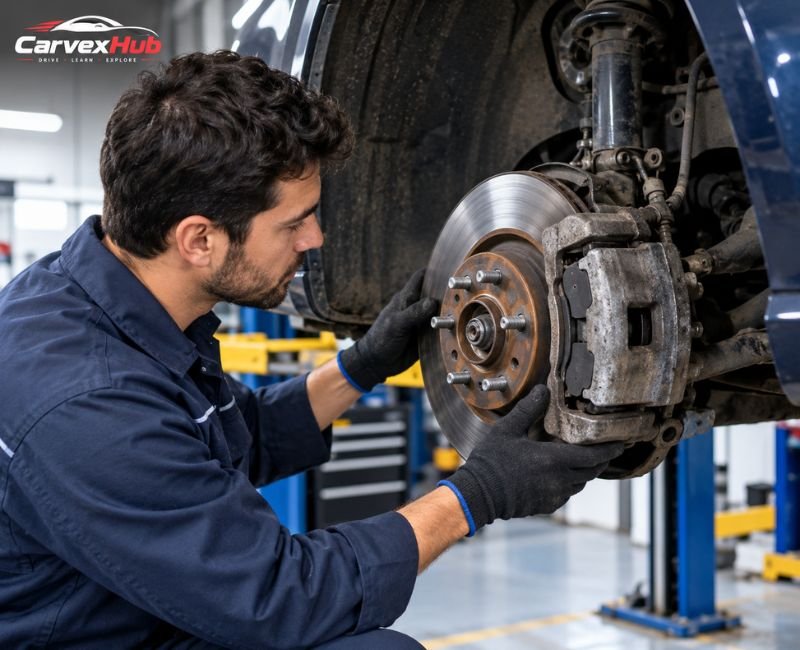
Irregular brake rotor surfaces often cause the brakes to vibrate. Rotors are the steel discs squeezed by the brake pads to slow down the vehicle’s wheels.. If their surfaces develop uneven thickness or irregular contact, braking may produce a noticeable shaking sensation.
However, the rotors are not always responsible. Worn brake pads, a sticking brake caliper, damaged tires, and suspension problems can cause similar symptoms. Pay attention to when the vibration occurs and where you feel it, then arrange a professional inspection to identify the actual problem.
Where Do You Feel the Brake Vibration?
The location of the shaking can provide useful clues about its source.
| Symptom | Possible cause |
| Pulsing brake pedal | Uneven rotors or normal ABS operation during hard braking |
| Steering wheel vibrates when braking | Front brake rotors, tires, or suspension components |
| Seat or entire car shakes | Rear brake issues, tires, or wheel bearings |
| Vehicle pulls to one side | Sticking brake caliper or uneven braking force |
These symptoms are just warning signs, not a definitive diagnosis. Always have a mechanic inspect your braking system before making any repairs.
7 Common Causes of a Car Shaking When Braking
1. Warped or Uneven Brake Rotors
Brake rotors experience Significant heat and friction during everyday driving. Over time, uneven wear, excessive heat, or variations in rotor thickness can create Unstable contact between the pads and discs. Drivers may notice a pulsing pedal or shaking that becomes more noticeable at higher speeds.
Common signs:

- Brake pedal vibration during deceleration.
- Steering wheel shaking during moderate or firm braking.
- Visible grooves, scoring, or heat-related discoloration.
Possible fix: A mechanic can measure rotor thickness and check for runout.If the rotor remains according to the manufacturer’s resurfacing may be suitable. Otherwise, replacement is necessary, often alongside new brake pads.
2. Worn or Glazed Brake Pads
When Brake pads used they gradually lose their friction material. Excessive heat can also harden or glaze their surfaces, reducing consistent contact with the rotors. Damaged pads may produce noise and uneven braking.
Common signs:
- Squealing or grinding sounds.
- Reduced braking performance.
- A burning smell following repeated hard stops.
Possible fix: Replace shabby or damaged pads and review the rotors for scoring or excessive wear. Brake pads are generally replaced in axle pairs to maintain balanced braking.

3. A Sticking Brake Caliper
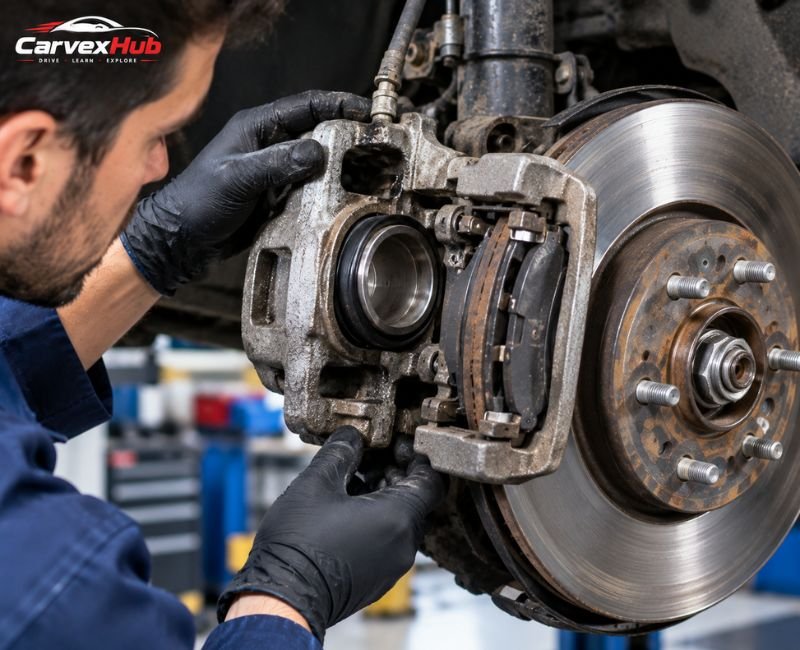
The caliper presses the brake pads firmly against the rotor surface. . When a caliper piston or its slide pins stick, the pads may remain in contact with the disc even after the driver releases the pedal. Excess heat can cause uneven wear.
Common signs:
- When braking the car it pulls to one side.
- A persistent burning smell near a wheel.
- One wheel becomes unusually hot after driving.
Possible fix: A mechanic should inspect the caliper, piston, slide pins, and brake hoses. Cleaning and lubrication may resolve certain slide-pin problems, but damaged calipers or other faulty components may require replacement.
4. Worn Suspension or Steering Components
The suspension and steering systems help keep the wheels stable and correctly positioned. Worn bushings, ball joints, or tie rods can allow excessive movement when braking transfers the vehicle’s weight toward the front.
Common signs:
- Clunking noises over bumps.
- Loose or unstable steering.
- Uneven tire wear and vibration during deceleration.

Possible fix: Replace damaged components and check the wheel alignment afterward. Ignoring severely worn steering or suspension parts can affect vehicle control and safety.
5. Incorrect Wheel Alignment or a Bent Wheel
Hitting a deep pothole or striking a curb can damage a wheel or affect its alignment. Although the problem might be subtle during normal driving, braking can make existing instability more noticeable.
Common signs:
- The vehicle drifts to one side.
- The steering wheel sits off-center.
- Uneven tire wear or visible wheel damage.
Possible fix: A wheel alignment can correct alignment angles when the components are undamaged. A bent or cracked wheel needs professional assessment and may require replacement. Alignment alone will not repair a damaged rim.
6. Tire Problems and Poor Wheel Balance
Tires can contribute to car vibration when braking, especially if they have uneven wear, flat spots, internal belt damage, or incorrect pressure. Poor wheel balance often causes shaking at particular speeds, although it may occur alongside a separate brake problem.
Common signs:
- Thumping or shaking that changes with speed.
- Irregular wear or a visible tire blister..
- Vibration that began after a tire change or impact.
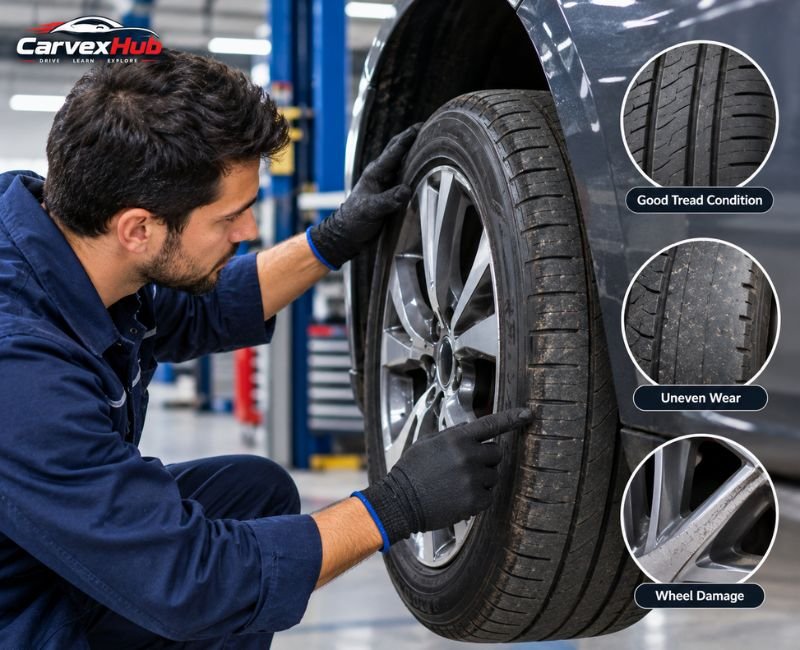
Possible fix: Have the tires, wheels, and pressures inspected. Balancing may correct an imbalance, but a damaged tire must be evaluated for replacement. Do not continue driving with tire blister or suspected structural damage.
7. Worn Wheel Bearings
The wheels of your car rotate on bearings, which need to be in good condition to allow everything to rotate smoothly. When a bearing wears out, it can produce noise, looseness, or wheel movement that affects braking stability.
Common signs:
- Humming or growling sound that varies with vehicle speed.
- Vibration around a wheel.
- Unusual wheel play or instability.
Possible fix: A mechanic can check bearing condition and wheel play. A worn bearing or hub assembly generally needs replacement. Because bearing failure can affect vehicle control, serious symptoms require prompt attention.
Car Vibrates When Braking at High Speed vs. Low Speed
The speed at which the vibration appears can help narrow down the possible causes.
Car Vibrates When Braking at High Speed
If your car vibrates when braking at high speed, uneven brake rotors, tire problems, wheel imbalance, or worn suspension parts may be responsible. Higher speeds can make small imperfections more noticeable, especially when braking loads increase.
Avoid repeated high-speed braking until the problem has been inspected. If the steering wheel shakes violently or the vehicle becomes difficult to control, slow down safely and stop driving.
Car Vibrates When Braking at Low Speed
When a car vibrates while approaching a stop, you might notice a pulsing brake pedal or a repeated shudder. Uneven rotor contact and a sticking caliper are possible causes.
However, a pulsing pedal during emergency braking on a slippery surface may be normal ABS operation. The anti-lock braking system rapidly adjusts brake pressure to help prevent wheel lockup.If there is any vibration when you stop gently, that should be checked.
Long downhill drives can also increase brake temperatures. Use an appropriate lower gear where safe and follow your vehicle manufacturer’s guidance to reduce unnecessary brake overheating.
Hybrid and Electric Car Brake Vibration
Hybrid and electric vehicles use regenerative braking to recover energy as the vehicle slows down. Because their friction brakes may be used less frequently, moisture and surface rust can sometimes develop on the brake rotors.
A light rough sensation during the first few stops may disappear as the rotors clean up. However, repeated vibration, grinding noises, reduced braking performance, or a persistent warning light should not be dismissed as normal EV behaviour.
Have the friction brakes inspected according to the manufacturer’s maintenance schedule, even if regenerative braking handles much of the everyday slowing.
How Much Does Brake Repair Cost?
Repair costs depend on the vehicle, parts quality, labour rates, and extent of the damage. These steps are approximate US-dollar evaluate rather than insured prices.
| Repair | Estimated cost |
| Brake pads per axle | 120–300 |
| Brake pads and rotors per axle | 300–700 |
| Brake caliper replacement | 150–400 each |
| Wheel alignment | 100–160 |
| Wheel bearing replacement | 250–650 per wheel |
| Suspension repairs | 200–1,000 or more |
These estimates can vary considerably and may exclude additional work. Ask the repair shop for an itemized estimate before authorizing repairs. Replacing parts without confirming the underlying fault can waste money and leave the vibration unresolved.
Is It Safe to Drive When Your Car Vibrates During Braking?
A gentle vibration isn’t necessarily a sign that the brakes are about to give in but it can’t be neglected either. Book in for an inspection at your earliest convenience and don’t drive unnecessarily until you’re clear on the reason for the vibration.
Stop the driving and inspection recovery help if you experience:
- Severe shaking or a strong pull to one side.
- Grinding, scraping, or other sudden braking noises.
- A soft or sinking brake pedal.
- Smoke or a strong burning smell around a wheel.
- A brake warning light attached by faulty braking .
- Suspected tire damage or a wheel that appears loose.
Never touch a potentially overheated wheel or brake component to check its temperature. If braking performance changes suddenly, stop in a safe location and seek professional help.
Final Thoughts
When a car vibrates when braking, the problem may involve the brake rotors, pads, calipers, tires, wheel bearings, or suspension. The speed at which the shaking occurs and whether it affects the pedal, steering wheel, or entire vehicle can help identify possible causes, but symptoms alone cannot confirm a diagnosis.
Have a qualified mechanic inspect the braking system and related components. Early diagnosis can help control repair costs and restore safe, predictable braking.
Frequently Asked Questions
Can warped brake rotors fix themselves?
No. Uneven rotor thickness or excessive runout generally will not correct itself through normal driving. A mechanic must measure the rotor to determine whether resurfacing is permitted or replacement is required.
Why does my steering wheel shake only when I brake?
This often points to front brake rotors, tire problems, or worn steering and suspension parts. An inspection can distinguish between these possibilities.
Can I replace brake pads without replacing the rotors?
Sometimes. If the rotors meet the manufacturer’s thickness and condition requirements, new pads may be sufficient. Damaged, excessively worn, or out-of-spec rotors may need resurfacing or replacement.
How long can I drive with brake vibration?
There is no safe universal time limit. Arrange an inspection promptly and avoid unnecessary journeys. If the pedal feels soft, the car pulls sharply, the brakes grind, or braking performance deteriorates, stop driving and arrange recovery assistance.
