Transmission slipping means your transmission can’t keep the engine’s power connected to the wheels, so the engine revs but the car doesn’t speed up. It’s usually caused by low or burnt fluid or worn internal parts. Fixes range from a $100 to $250 fluid service to a $1,500 to $3,500 rebuild, depending on the cause.
Transmission slipping happens when your car’s transmission can’t hold a gear, so engine power doesn’t reach the wheels properly. Common symptoms include rising RPMs without more speed, delayed or harsh shifting, whining or grinding noises, a burnt smell, and warning lights. The most common causes are low or burnt fluid, worn clutch packs, a failing torque converter, and faulty solenoids. The fix depends on the cause, from a fluid service or leak repair to a rebuild or replacement, and it rarely gets better on its own. In the US, catching it early often costs a few hundred dollars, while ignoring it can push a replacement to $2,000 to $8,000 or more. This guide covers each symptom, cause, fix, and cost so you can act early.
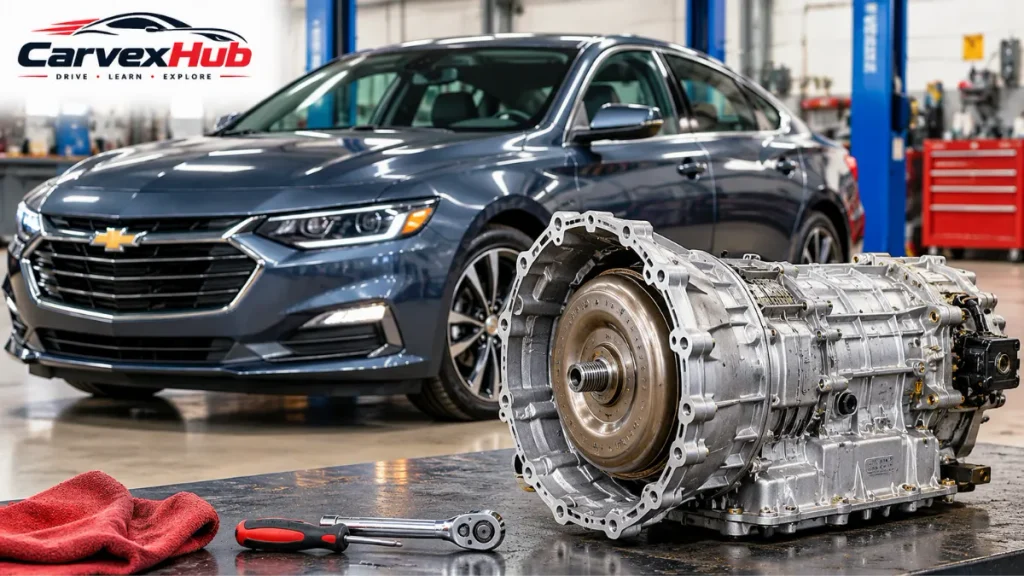
What Is Transmission Slipping?
A transmission slips when it can’t hold a gear. Inside an automatic, clutch packs, bands, and hydraulic pressure lock gears in place. When one of these stops gripping properly, power from the engine “slips” instead of reaching the wheels.
Automatic, CVT, and Manual Slipping Compared
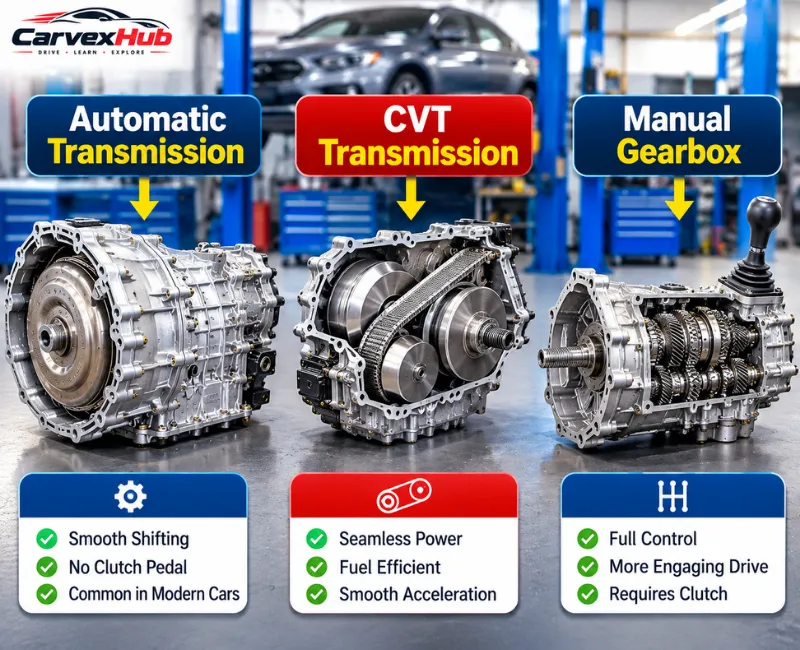
| Type | What slipping feels like | Common culprits |
| Automatic | Revs jump between shifts, or the car drops out of gear | Low fluid, worn clutch packs or bands, torque converter, solenoids |
| CVT | Engine drones, acceleration feels rubbery, or the car surges | Fluid breakdown, worn belt or pulleys, software or sensor faults |
| Manual | Revs rise but speed doesn’t, especially in higher gears | Worn clutch disc, oil-contaminated clutch, hydraulic problems |
Manual slipping is almost always a clutch issue rather than the gearbox itself.
Transmission Slipping Symptoms
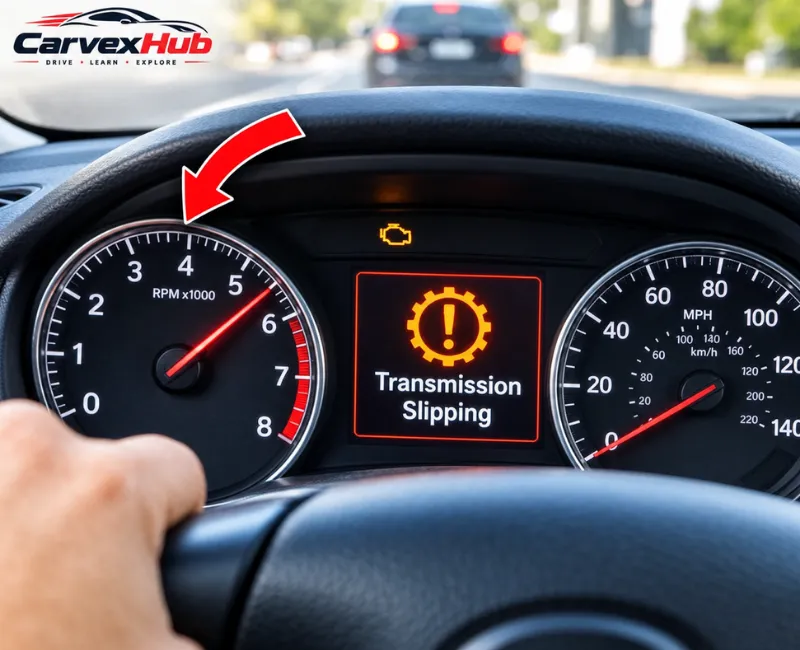
Slipping can start subtly. Here is what to watch for.
RPMs Climb but the Car Doesn’t Accelerate
This is the classic sign, and it’s especially noticeable at high RPM, such as when merging or climbing a hill. Think of it like spinning your tires on ice: the engine is working, but the power isn’t getting through.
Hesitation or Lurching When Accelerating
If the car hesitates, then lurches forward, or feels like it’s searching for a gear when you press the gas, the transmission isn’t engaging cleanly.
Delayed Shifting and Jerking
A transmission that shifts late, harshly, or with a clunk is struggling with hydraulic pressure or shift control. Many drivers describe this as the car not shifting properly.
Noises and Smells
A whining noise often points to a fluid or pump problem, while a grinding noise can mean worn gears or, in a manual, clutch or synchronizer trouble. A sharp burnt smell usually means overheated fluid.
Warning Lights
A check engine light or transmission warning light often comes on along with the slipping. A scan tool may show a code such as P0730 (incorrect gear ratio), which points to slipping or a gear-engagement problem. A code narrows the search but doesn’t identify the faulty part on its own.
What Causes a Transmission to Slip?
Low Transmission Fluid and Fluid Leaks
Transmission fluid creates the hydraulic pressure that engages gears, and it also cools and lubricates. Low fluid reduces that pressure. A leak is the usual reason the level drops, since a transmission doesn’t burn fluid like an engine burns oil. Look for reddish or brown spots under the car.
Dirty or Burnt Fluid
Heat and age break fluid down. Dirty fluid carries clutch material that wears parts faster and can clog passages. These fluid problems are often the cheapest ones to catch early.
Worn Clutch Packs and Bands
These friction parts wear like brake pads. Once they can’t grip, the transmission slips, most often under load.
Failing Torque Converter
The torque converter connects the engine to the automatic transmission. When it fails, you may feel shuddering, slipping, or overheating.
Faulty Solenoids and Valve Body Problems
Solenoids direct fluid to engage each gear. A sticking or failing solenoid can cause delayed shifting, flaring between gears, or being stuck in one gear.
Transmission Overheating
Towing, stop-and-go traffic, and old fluid all raise temperatures. Overheating accelerates wear, so it’s both a cause and a result of other problems. Transmission and engine overheating can both lead to serious vehicle problems. If your engine temperature rises, learn about the common car overheating causes, warning signs, and fixes to understand how to identify and prevent engine overheating.
CVT Belt and Pulley Wear
CVTs use a belt or chain and pulleys instead of fixed gears. Wear or contaminated fluid can cause slipping that feels different from a traditional automatic, often a rubber-band feel where the engine revs while the car lags behind.
Transmission Slipping Only When Cold: Normal or a Problem?
A short delay on a cold morning can be normal, but slipping that stays after the car warms up is not. The difference is how long it lasts.In very cold weather, transmission fluid thickens and can make the car slow to engage for the first minutes. Mister Transmission says this typically clears as the engine warms up, and that slipping which continues at normal operating temperature points to a mechanical problem, not just cold fluid.The opposite case also matters. Burt Brothers notes that rough or delayed shifting that shows up only when the engine is cold can be an early sign of low or deteriorating fluid, or minor internal wear. So a cold-only problem is worth checking, not ignoring.
Use these questions to sort it out:
- How long does it last? A few seconds to a couple of minutes that fades is milder than a problem that lasts the whole drive.
- Is it getting worse? A cold-only slip that spreads to warm driving has moved from a fluid issue toward worn parts.
- What does the fluid look like? Low, dark, or burnt-smelling fluid is a warning sign even if the slip only appears cold.
- Are there stored codes? A basic OBD-II scan can show a gear-ratio or solenoid code.
If the slip repeats on cold starts and the fluid or codes look wrong, book an inspection before it spreads to warm driving.
How to Diagnose a Slipping Transmission at Home
These checks help you describe the problem accurately. They don’t replace a professional diagnosis.
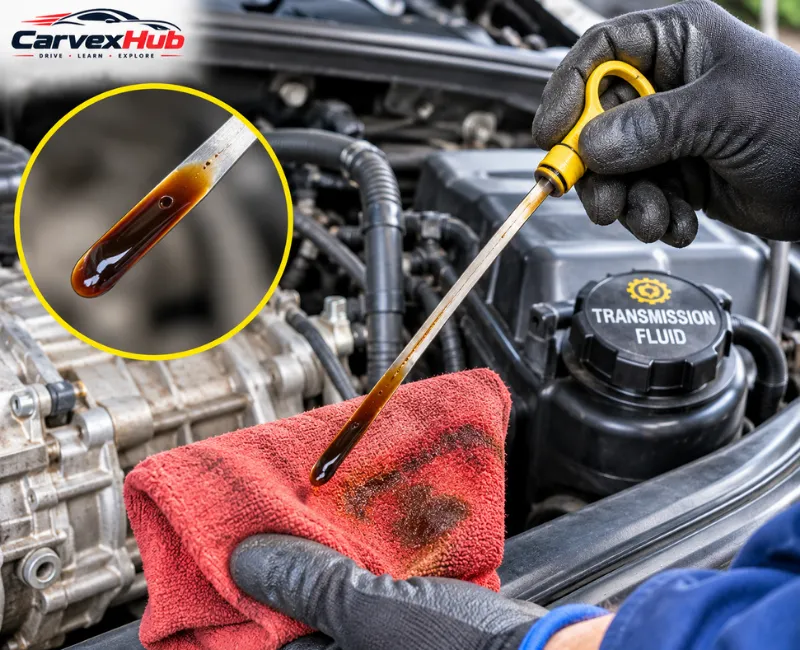
How to Check Transmission Fluid
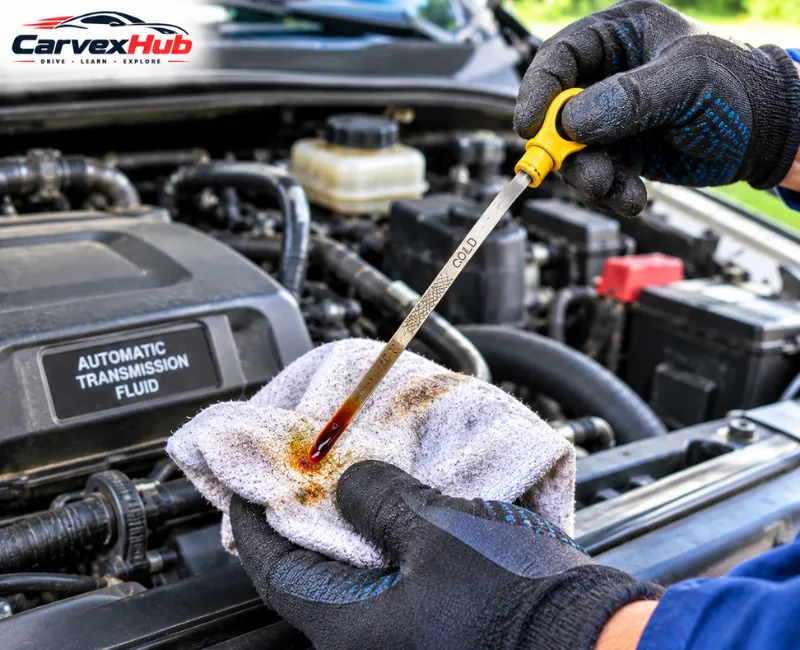
- Check your owner’s manual first. Many newer cars have no dipstick and are meant to be checked by a shop.
- If your car has a dipstick, follow the manual’s procedure. This often means a warm engine on level ground, though procedures vary by manufacturer.
- Pull out the dipstick, clean it, put it back in , and check the level.
- Check the condition. Fresh fluid is typically bright red or pink and fairly clear. Dark brown or black fluid, or fluid that smells burnt, suggests heat damage or wear.
Quick Checks Before Calling a Shop
- Note when it slips: cold, warm, uphill, or in particular gears.
- Look under the car for fluid spots.
- Scan for codes if you have a basic OBD-II reader.
Can You Keep Driving With a Slipping Transmission?
You can sometimes limp to a shop, but it’s a gamble. Every mile with a slipping transmission creates heat and friction that can turn a small repair into a major one. If it slips badly, overheats, or the car loses power in traffic, stop driving and have it towed. Slipping can also be a safety issue when you need to accelerate to merge or pass.
How to Fix Transmission Slipping
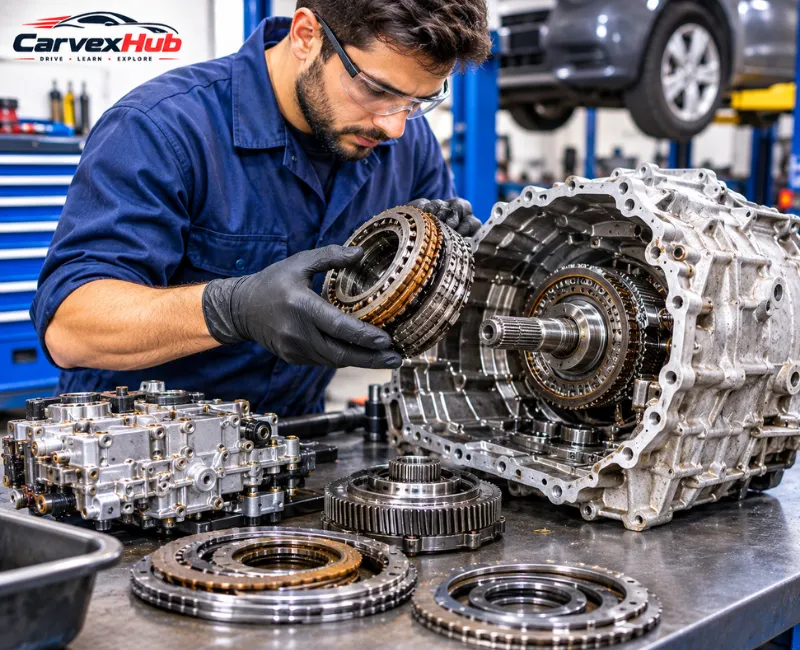
The right fix depends on the cause.
- Low fluid: Top off with the exact fluid type your manufacturer specifies. Using the wrong fluid can cause its own problems, so this matters.
- Fluid leak: Fix the source, whether a pan gasket, seal, or cooler line, before refilling.
- Dirty fluid: A fluid and filter service may help if the damage is minor. Heavily worn transmissions don’t always benefit, and a flush on a high-mileage, neglected unit is debated, so ask the shop what they recommend and why.
- Solenoids: These can often be replaced without removing the whole transmission.
- Torque converter: This requires removing the transmission in most cases.
- Manual clutch: Replace the worn clutch disc and related parts.
- Bands and internal wear: This generally means a rebuild.
Repair vs. Rebuild vs. Replacement
- Repair: Fixing a specific part such as a solenoid or a leak. This is the least expensive route when the damage is limited.
- Rebuild: The transmission is disassembled and worn parts are replaced. Quality depends heavily on the shop.
- Replacement: A remanufactured, used, or new unit. This often offers a longer warranty but costs more.
On an older, low-value car, a replacement may cost more than the car is worth, so weigh the repair bill against the car’s value and how long you plan to keep it.
Transmission Slipping Repair Cost in the USA
Caught early, slipping often costs a few hundred dollars to fix. Left alone, it can reach $1,500 to $3,500 for a rebuild or $2,000 to $8,000+ for a replacement. These are US ranges from the sources below. Your quote will depend on the vehicle, transmission type, region, and whether you use a dealer or an independent specialist.
| Repair | Typical cost (USD) | Source |
| Fluid service (drain and fill) | $100 to $250 | Bumper, Oct 2026 |
| Fluid change, professional | $150 to $350 | ThePricer, Aug 2026 |
| Fluid and filter service | $604 to $766 | ThePricer, Aug 2026 |
| Single solenoid | $150 to $500 | Bumper, Oct 2026 |
| Solenoid pack | $300 to $800 | Bumper, Oct 2026 |
| Valve body repair or replacement | $300 to $800 | Bumper, Oct 2026 |
| Torque converter replacement | $600 to $1,200 | Bumper, Oct 2026 |
| Rebuild (independent specialist) | $1,500 to $3,500 | Bumper, Oct 2026 |
| Remanufactured replacement | $2,000 to $4,000 | Bumper, Oct 2026 |
| New OEM replacement | $3,500 to $8,000+ | Bumper, Oct 2026 |
Two cost points are worth knowing before you approve any work:
- Fluid comes first. Bumper advises confirming the fluid has been serviced recently, because a $150 service can prevent a problem from being quoted as a $2,000+ repair. ThePricer adds that fresh fluid does not repair worn clutches or a failing converter, so diagnosis still comes before assuming a fluid change will fix slipping.
- Waiting costs more. Bumper’s example: a $150 fluid service or $400 solenoid job at the first symptoms can prevent a $2,500 rebuild that results from another 15,000 miles of driving on a slipping transmission.
Other sources land in the same area. SlashGear (2024) puts torque converter work at $600 to $1,000 and a rebuild at $1,500 to $3,500, and SoFi (2025) puts a replacement at $2,500 to $6,000 on average. The most reliable approach is a written estimate for a specific diagnosis, ideally from more than one shop.
How to Choose a Reliable Transmission Shop
Decide first whether you need a transmission specialist or a general mechanic. Specialists handle internal repairs and rebuilds more often, while a general shop may be fine for fluid service or a simple leak. Bumper recommends a rebuild from a specialist with a documented warranty, and a second opinion from a dedicated transmission shop for any repair over $500.
Questions worth asking:
- Is there a diagnostic fee, and is it applied to the repair?
- Can I get a written estimate before work begins?
- What warranty covers parts and labor, and for how long?
- Is the work done in-house?
Check reviews for how the shop handled diagnosis and communication, not just the star rating. A trustworthy shop explains the problem and doesn’t pressure you into the most expensive fix.
How to Prevent Transmission Slipping
- Follow the fluid change interval in your owner’s manual, and shorten it if you tow or drive in heavy traffic. Intervals vary widely between manufacturers, so there is no single number that fits every car.
- Fix leaks early.
- Don’t ignore small symptoms like delayed shifting.
- Let the car come to a full stop before switching between drive and reverse.
- Avoid overloading the vehicle.
Conclusion: Act Early on Transmission Slipping
Slipping is your transmission’s early warning, and catching it early often means the difference between a fluid service and a rebuild. Check your fluid, note exactly when the problem occurs, and get a professional diagnostic if symptoms continue. Get a written estimate and compare it with a second opinion before approving major work.
Transmission Slipping FAQs
1. How do you fix a slipping transmission?
Start by checking the fluid level and condition, and top up or change it if it’s low or burnt. If slipping continues, you may need a solenoid or clutch repair, a rebuild, or a replacement.
2. How much does it usually cost to fix a slipping transmission?
Minor fixes like a fluid change or solenoid replacement cost roughly $150-$700. A rebuild typically runs $2,000-$4,500, and a full replacement can reach $4,000-$7,000 or more.
3. What are the signs that your transmission is going out?
Common signs include delayed or rough shifting, slipping gears, a burning smell, whining or clunking noises, and a check engine light. Red or dark fluid leaking under the car is another warning.
4. What causes transmission slipping?
The most common causes are low or old fluid, worn clutches or bands, and faulty solenoids. Overheating and internal wear from high mileage can also cause it.
5. How long will a car last with a bad transmission?
It can range from a few days to a few months depending on the damage, but it can fail suddenly. Driving on it risks stranding you and turning a repairable problem into a full replacement.
6. What is the biggest killer of transmissions?
Heat is the biggest killer, usually caused by old or low fluid, towing heavy loads, or aggressive driving. Overheated fluid breaks down and stops protecting internal parts.
7. What does a slipping transmission look like?
The engine revs high but the car accelerates slowly, or the gears shift late or unexpectedly. You may also see a warning light or reddish fluid under the car.
8. Is it worth fixing a bad transmission?
Yes, if the rest of the car is in good shape and the repair costs less than about half its value. If the car is old with other major problems, replacing the vehicle may make more sense.
9. Which car has the worst transmission problems?
Nissan models with CVT transmissions (such as the Altima, Sentra and Rogue) and Ford’s DCT-equipped Focus and Fiesta are widely reported for problems. Reliability varies by model year, so check owner reports for your specific car.
10. Is it cheaper to fix a transmission or replace it?
Repairing is usually cheaper when the problem is minor, such as a solenoid or fluid issue. If the damage is severe, a rebuild or replacement is more reliable and often better value than repeated repairs.
11. What’s the average lifespan of a transmission?
Most transmissions last about 150,000-200,000 miles with proper care. Regular fluid changes and gentle driving can extend that further.
Agar chaho to main inhe thora lamba ya short kar sakta hoon, ya FAQ schema markup bhi bana doon.
