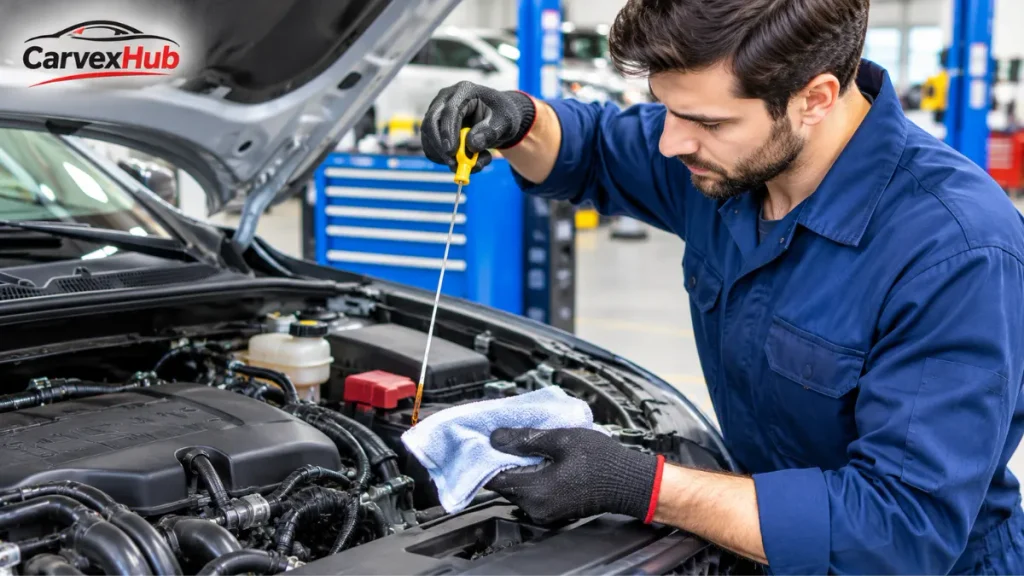
To check transmission fluid, park on level ground and follow your manual for engine temperature and gear position. Pull out the dipstick, wipe it clean, reinsert it fully, then remove it again to read the level. Healthy fluid sits within the marked range and looks clear red, while dark or burnt-smelling fluid signals a problem.
Checking your transmission fluid helps your vehicle shift smoothly and prevents costly transmission damage. It only takes a few minutes, and the fluid’s level, color, and smell can reveal problems early. Low fluid, a dark color, or a burnt smell usually means it’s time for an inspection or service. Keep in mind that some newer vehicles have sealed transmissions without a traditional dipstick, so if yours is one of them, consult a qualified mechanic.
1. Why Checking Your Transmission Fluid Is Important
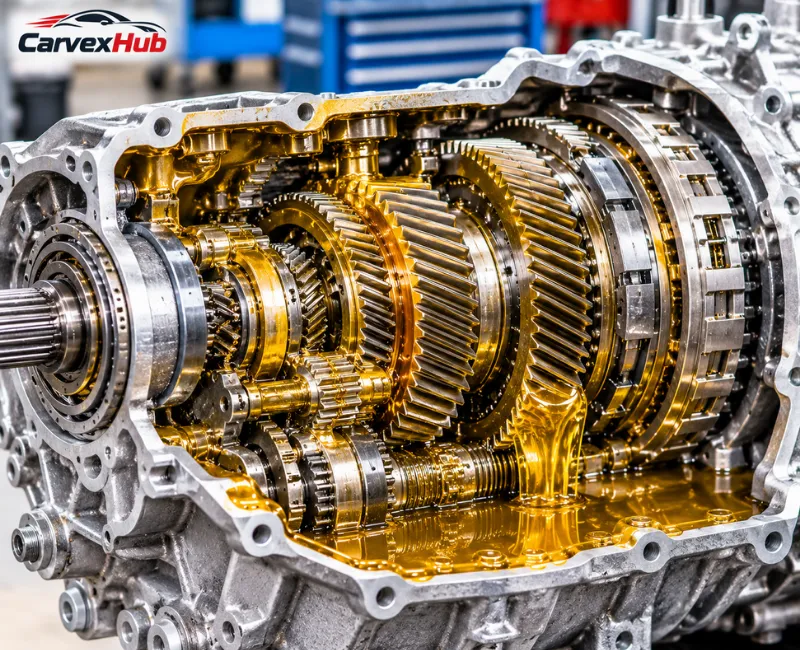
Transmission fluid lubricates internal components, controls heat, and creates hydraulic pressure for smooth gear changes.Low or contaminated fluid can cause different types of damaging and overheating. Regular inspections help identify problems before they become expensive repairs.
What Does Transmission Fluid Do?
Transmission fluid provides four main benefits:
- Lubrication: Reduces friction between moving parts.
- Cooling: Helps control transmission temperature.
- Hydraulic pressure: Supports gear changes.
- Protection: Reduces internal wear.
Different transmissions require specific fluids, including CVT, dual-clutch, and conventional automatic systems.
How Low Transmission Fluid Affects Your Car
If transmission fluid is low it causes gears to slip delayed shifting and over heating.Low fluid can quickly lead to heat buildup, so it helps to understand the causes of car overheating.” Continued driving with insufficient fluid may damage internal components.
2. How to Locate the Transmission Dipstick
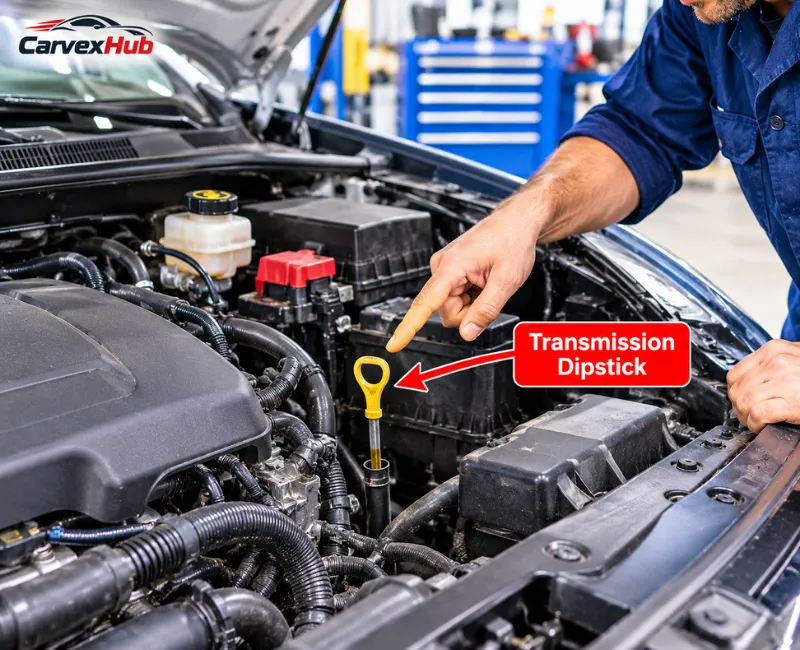
Many conventional automatic transmissions have a dedicated dipstick under the hood. Its location depends on the vehicle.
Where Is the Transmission Dipstick Located?
Open the hood and check the engine compartment, particularly near the rear of the engine bay.The handle may be colored, but designs vary.If you not find transmission dipstick please contact your owner “s manuel
Transmission Dipstick vs. Engine Oil Dipstick
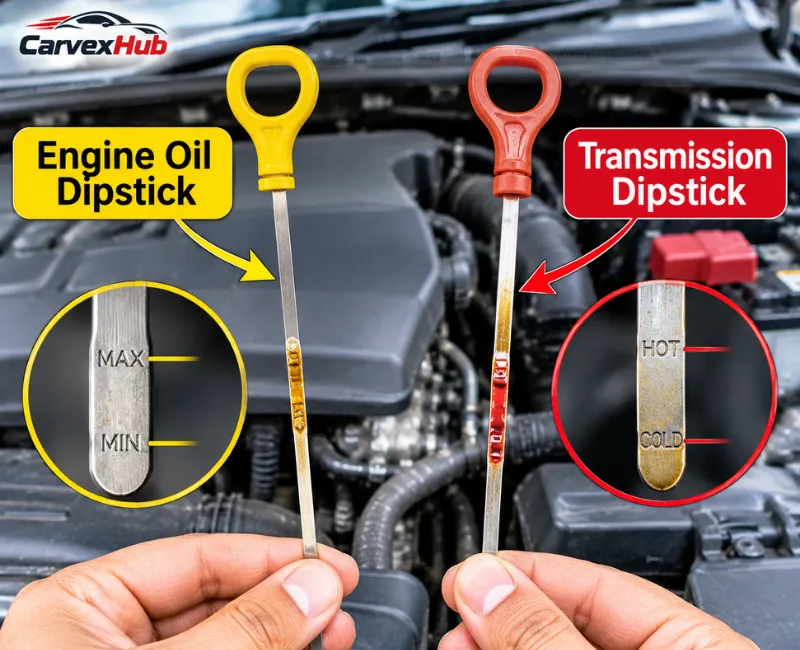
Both dipsticks measure different fluids.
| Feature | Transmission Dipstick | Engine Oil Dipstick |
| Purpose | Transmission fluid | Engine oil |
| Location | Varies | Near engine |
| Markings | HOT/COLD | MIN/MAX |
Never add fluid through the wrong opening.If you are unsure which fluid belongs where, read about engine oil and filter types first.”
What If Your Car Does Not Have a Dipstick?
Some vehicles use sealed transmissions with special fill and level-checking plugs.
These systems still require maintenance. Check your owner’s manual or consult a qualified technician.
3. How to Check Transmission Fluid Step by Step
If your vehicle has a dipstick, follow these steps while observing the manufacturer’s instructions.
Park Your Car on a Level Surface
To check transmission fluid level correctly ,Park your car on a smooth surface because if the surface is not smooth ,the level may not check correctly.
Warm Up the Engine and Follow Manufacturer Instructions
Some transmissions must reach normal operating temperature before checking. Others require specific engine and gear-selector positions.
Follow your owner’s manual rather than assuming every vehicle uses the same procedure.
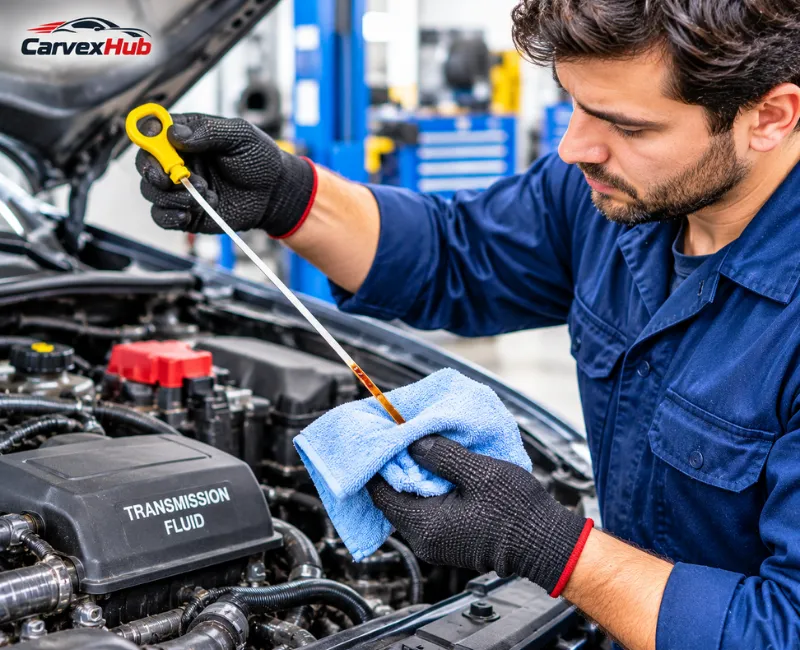
Pull Out and Clean the Transmission Dipstick
Remove the transmission dipstick andclean it with a cloth.
Reinsert the Dipstick and Check the Fluid Level
Insert it fully, remove it again, and compare the fluid with the measurement markings.
Repeat if the reading is unclear.
Safety tip: Hot components can cause burns. Keep your hands away from moving belts and fans.
4. How to Read Transmission Fluid Levels on the Dipstick
Check the fluid with measurement scale. Most dipsticks have markings showing acceptable levels.
Understanding the Full and Low Marks
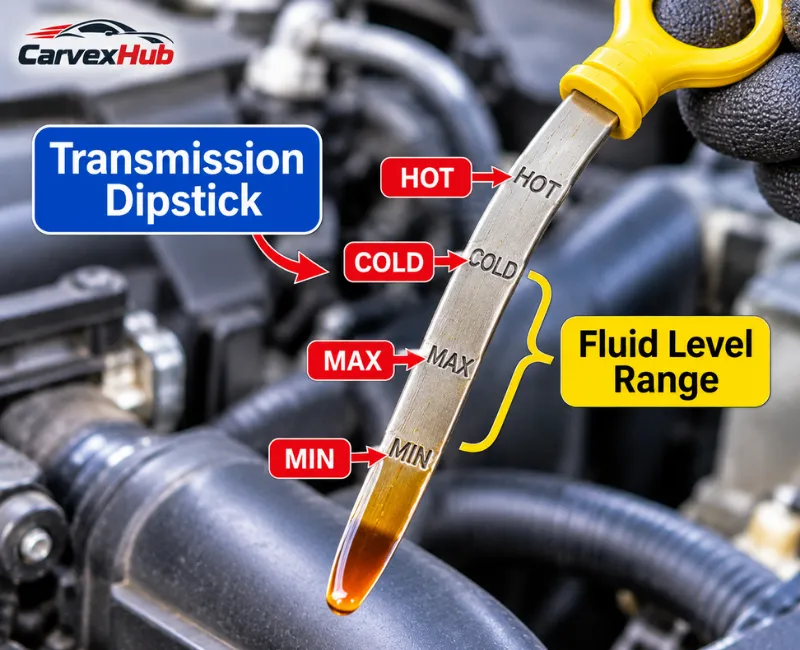
Common markings include HOT, COLD, MIN, and MAX.
- Within range: Fluid level is acceptable.
- Below range: Fluid may be insufficient.
- Above range: Transmission may be overfilled.
Always use the markings that match the specified checking temperature.
What Happens If Transmission Fluid Is Too Low or Too High?
Low fluid can reduce hydraulic pressure and lubrication. Overfilling may introduce air into the fluid, affecting transmission operation.
Correct the level according to manufacturer specifications.
5. What Color Should Transmission Fluid Be?
Fluid color can provide useful informations but contact a professional to locate the problem..
Reddish-Pink Fluid: Generally Healthy
Many conventional automatic transmission fluids are red or reddish-pink when new. However, some modern fluids have different colors.
Brown or Dark Brown Fluid: Possible Fluid Deterioration
Dark brown fluid may indicate aging, oxidation, or contamination. Check the maintenance history and arrange an inspection if necessary.
Black Fluid, Burnt Smell, or Metal Shavings
Very dark fluid, a burnt smell, or visible metal particles may indicate overheating or internal wear.
Watch for:
- Burnt or unusual smells.
- Visible metal particles.
- Excessive debris.
Have the transmission inspected if these signs appear.
6. Signs Your Transmission Fluid Is Low or Leaking
If your car”s transmission fluid is low for more than one time it shows some problem.contact your professional.
Common Symptoms of Low Transmission Fluid
Common warning signs include:
- Delayed shifting into Drive or Reverse.
- Slipping gears.
- Higher engine RPM without matching acceleration.
- Unusual whining noises.
- Overheating or warning lights.
These symptoms can have other causes, so proper diagnosis is important.For a deeper look, see our guide on transmission slipping symptoms, causes, and repair costs.”
Reddish Fluid Spots Under Your Car
Reddish or brownish spots under your car means a transmission fluid leak.
Possible sources include seals, gaskets, cooler lines, and transmission connections.
Common Reasons for Transmission Fluid Loss
Common causes include:
- Worn transmission seals.
- Damaged gaskets.
- Leaking cooler lines.
- Faulty fluid connections.
- Cracked transmission housing.
Repair the leak instead of adding fluid on the car.
7. How to Add Transmission Fluid Safely
Only add fluid if your vehicle’s manufacturer allows it. Using an incorrect fluid can damage transmission components.
Choose the Correct Transmission Fluid for Your Vehicle
Check your owner’s manual for the exact fluid specification. CVTs, dual-clutch transmissions, and conventional automatics may require different fluids.
Use a Long, Narrow-Spout Funnel
If filling through the dipstick tube is permitted, use a clean funnel to prevent spills and contamination.
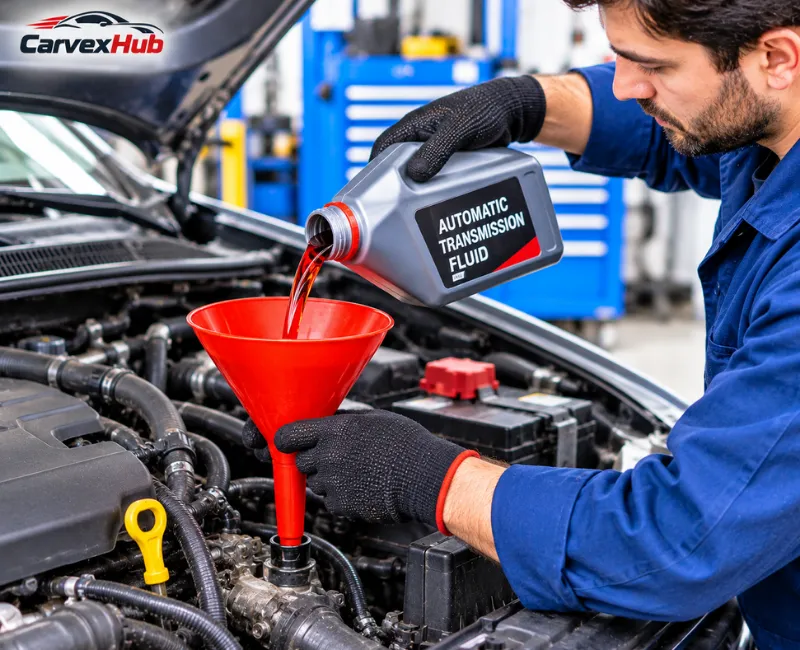
Add Fluid Gradually and Avoid Overfilling
Add some amount of fluid and check the level using the correct procedure.
Stop when the fluid reaches the level.If it continues dropping, have the leak repaired.
8. How to Check Transmission Fluid Without a Dipstick
Some newer vehicles use sealed transmission systems instead of traditional dipsticks.
Understanding Sealed Transmission Systems
A sealed transmission has no dipstick. However, sealed does not necessarily mean maintenance-free.
Follow the manufacturer’s inspection and replacement schedule.
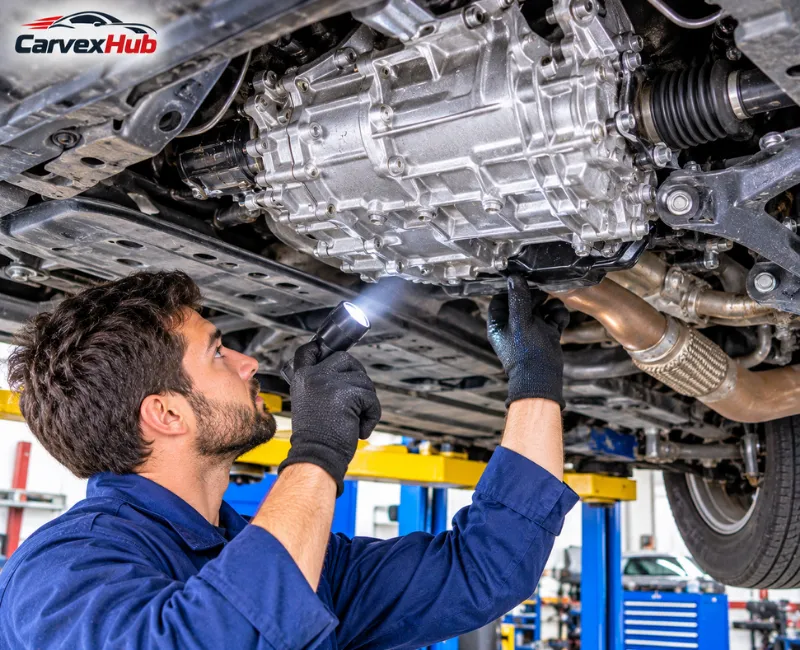
Why Some Vehicles Require a Special Temperature and Level-Checking Procedure
Some systems use a special level-checking plug and require a specific fluid temperature.
A technician use a scan tool to monitor transmission temperature before checking the level.
Because this procedure involves hot fluid and working underneath the vehicle, professional assistance is recommended.
9. How Often Should You Check Transmission Fluid and When to Get Professional Help?
Inspection and replacement schedules vary by vehicle. Your owner’s manual provides the correct maintenance requirements.
Recommended Transmission Fluid Inspection Frequency
Follow the manufacturer’s recommended schedule. Also check for leaks and perform inspection if some problem develop.
When Low Fluid or Transmission Problems Need Professional Attention
Contact a qualified mechanic if you notice:
- Repeatedly low fluid readings.
- Visible leaks.
- Burnt-smelling fluid.
- Metal particles.
- Slipping gears or delayed shifting.
- Transmission overheating.
Avoid driving if the transmission slips severely or the vehicle loses power.
How Regular Checks Help Prevent Expensive Transmission Repairs
Regular inspections help identify fluid loss and contamination early. Always use Correct fluid level and manufacturer-approved fluid to protect internal transmission components.
Conclusion
Learning how to check transmission fluid helps you recognize potential problems early. Follow the manufacture’s recommended checking procedure, maintain the correct fluid level, and use only the specified transmission fluid.
Never ignore leaks, burnt smells, or unusual shifting. Regular maintenance and timely inspections can help protect your transmission and reduce the risk of expensive repairs.
Frequently Asked Questions (FAQs)
1. How do I check the transmission fluid level correctly?
Park your car on level ground, follow the manufacturer’s temperature and engine instructions, then use the dipstick to check the fluid level.
2. How will a car act if it’s low on transmission fluid?
A car with low transmission fluid may experience slipping gears, delayed shifting, unusual noises, overheating, or difficulty accelerating.
3. Do you check transmission fluid in neutral or park?
Most vehicles require the transmission to be in Park, but some models specify Neutral, so always check your owner’s manual.
4. Do you check transmission fluid with a vehicle running?
Some automatic transmissions require the engine to be running, while others use a different procedure; follow your manufacturer’s instructions.
5. Why do mechanics say don’t change transmission fluid?
Mechanics may advise against changing fluid in severely worn transmissions because existing problems could worsen, but proper maintenance is generally important.
6. Can I just add transmission fluid if it’s low?
Yes, if the manufacturer allows it, but use the exact specified fluid, avoid overfilling, and fix any leaks causing the low level.
