
Choosing the right used SUV can be a smart decision for drivers who want comfort, space, and reliability without paying the high price of a new vehicle. Whether you need a family-friendly ride or a vehicle for daily commuting, pre-owned SUVs offer plenty of options for different budgets and lifestyles.
However, finding the right one requires careful research and attention to detail. Checking vehicle history reports, comparing SUV reliability, and understanding maintenance costs can help you avoid expensive surprises. A proper pre-purchase inspection also reveals hidden problems before you buy. With the right approach, you can find a dependable used SUV that meets your needs and provides lasting value. If you want to explore different SUV categories and their features, read our complete SUV buying guide to understand what makes each type suitable for different buyers.
1. Determine Your Budget and Total Ownership Costs
Before searching for used SUVs, decide how much you can comfortably spend. A clear budget helps you avoid unnecessary expenses and focus on vehicles within your price range.
Remember, the purchase price is only part of the total cost. You also need to consider:
- Insurance premiums and registration fees.
- State sales taxes and documentation charges.
- Fuel expenses and routine maintenance.
- Unexpected mechanical repairs.
- Monthly loan payments and interest.
Larger SUVs may also require more expensive tires, brakes, and fuel. Keep some extra money available for repairs after purchasing your vehicle.
2. Research Different Used SUV Models Before Buying
Not every SUV offers the same performance, reliability, or passenger space. Researching different models can help you find one that matches your lifestyle and budget.You can also compare the latest vehicle features and designs through our guide to new car reviews before deciding which used SUV best matches your needs.
Start by comparing these SUV categories:
- Compact SUVs: Suitable for city driving, smaller families, and easier parking.
- Midsize SUVs: Offer a balance of passenger space and everyday practicality.
- Full-size SUVs: Provide additional seating, cargo capacity, and towing capability.
Compare Reliability and Common Problems
Check owner reviews, reliability ratings, and common mechanical issues for your preferred model year.
Pay attention to engine performance, transmission reliability, fuel economy, and maintenance costs. Also compare gasoline, hybrid, and electric SUVs if fuel efficiency is important to you.
Researching before visiting a dealership can help you avoid models with expensive repair histories.
3. Check the Vehicle History Report Before Buying a Used SUV

A vehicle history report can reveal important information about an SUV’s past. It may help you identify previous accidents, ownership changes, mileage records, and title problems.
Services such as CARFAX and AutoCheck allow buyers to access available vehicle records using the Vehicle Identification Number (VIN).
Important Details to Check
- Accident history: Look for reported collisions and damage.
- Mileage records: Watch for unusual changes or possible odometer fraud.
- Previous owners: Review ownership history.
- Maintenance records: Check whether the SUV received regular servicing.
- Title status: Be careful with salvage, rebuilt, and flood-damaged titles.
A clean history report does not guarantee that a vehicle has never been damaged. Always combine the report with a physical inspection and professional mechanical evaluation.
4. Inspect the Used SUV’s Exterior and Interior Condition
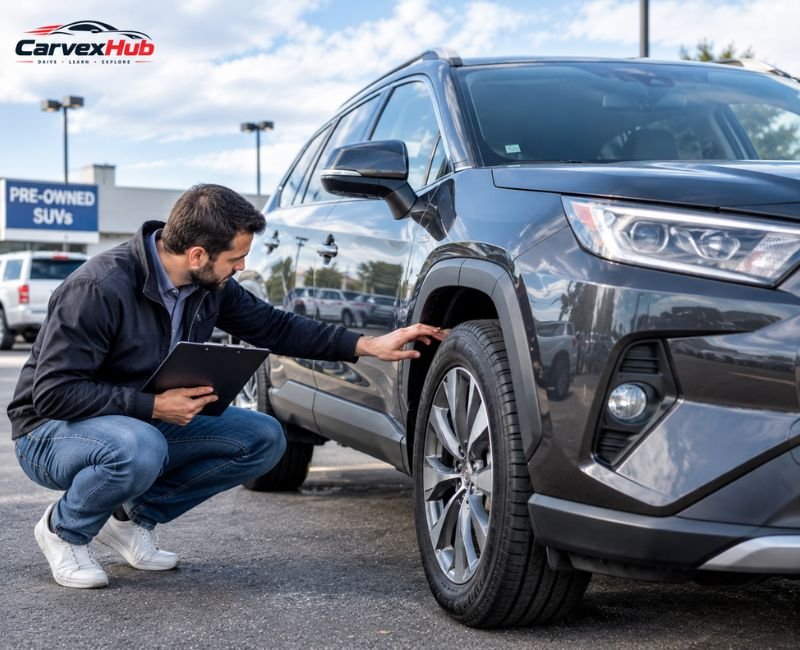
A vehicle may look attractive in online pictures but show signs of damage during a closer inspection. Take time to examine its exterior and interior before making an offer.
Check the Exterior
Look for dents, scratches, rust, and uneven paint. Different paint shades or inconsistent gaps between body panels may indicate previous accident repairs.
Also inspect the windshield, headlights, taillights, and side mirrors for cracks or damage.
Examine the Interior
Check the seats, dashboard, carpets, and door panels. Test the air conditioning, power windows, infotainment system, and other electronic features.
Look for damp carpets, water stains, or unusual odors that could indicate previous flood damage.
Finally, inspect the tires for tread depth and uneven wear. These problems may point to alignment or suspension issues .Before buying, learn about different car tire types, buying tips, and maintenance to understand what to look for when checking an SUV’s tires.
5. Get a Professional Mechanical Inspection Before Buying

A used SUV can look perfect while hiding serious mechanical problems. That is why an independent pre-purchase inspection is one of the most important steps before completing a deal. Understanding basic engine components can help you recognize potential problems. Check our guide on how a car engine works and its maintenance for more information.
Ask a trusted mechanic to examine the vehicle’s major components.
Important Mechanical Components to Check
- Engine: Look for unusual noises, leaks, smoke, and warning lights.
- Transmission: Check for slipping, delayed shifting, or vibrations.
- Brakes: Examine brake pads, rotors, and stopping performance.If you want to understand the braking system better, read our guide on how car brakes work and learn about the main components responsible for safe stopping.
- Suspension: Inspect shocks, struts, and related components.
- Steering: Check for excessive play or unusual handling.
- Electrical systems: Test the battery, charging system, and dashboard electronics.
A mechanic can also use diagnostic equipment to identify stored trouble codes.
Do not ignore small problems. Even minor symptoms can indicate expensive repairs. If a seller refuses an independent inspection, consider looking for another vehicle.
6. Take a Thorough Test Drive Before Buying a Used SUV

A test drive helps you understand how an SUV performs in real driving conditions. It can also reveal problems that are difficult to notice when the vehicle is parked.
Whenever possible, drive on city streets and highways before making your decision.
What to Notice During the Test Drive
Pay attention to these important details:
- Engine response: It should start smoothly and accelerate properly.
- Transmission: Gear changes should feel consistent.
- Braking: The SUV should stop without unusual noises or pulling.
- Steering: Watch for vibrations or difficulty maintaining a straight path.
- Suspension: Listen for knocking sounds over bumps.
- Comfort: Evaluate seating, visibility, and cabin noise.
Also test the air conditioning, backup camera, parking sensors, and other available features.
If possible, arrange a cold start before driving. This may reveal engine starting problems or unusual noises.
7. Check Used SUV Safety Features and Recalls
Safety should never be overlooked when choosing a pre-owned SUV. Different model years and trim levels offer different safety technologies, so check which features are actually included.
Important safety features include:
- Airbags and anti-lock braking systems (ABS).
- Electronic stability control.
- Blind-spot monitoring.
- Lane departure warnings.
- Rearview cameras.
- Automatic emergency braking.
Check Safety Ratings and Open Recalls
Use the National Highway Traffic Safety Administration (NHTSA) website to check whether the SUV has outstanding safety recalls. You can search using its VIN.
You should also review crash-test information from the Insurance Institute for Highway Safety (IIHS).
If a recall appears, ask whether the required repair has been completed. Many recall repairs are available at no cost through authorized dealerships.
8. Compare Used SUV Prices and Negotiate the Best Deal
Finding the right SUV is only half the job. You also need to make sure the asking price matches its condition, mileage, and market value.
Use Kelley Blue Book (KBB) to research estimated vehicle prices. Compare similar SUVs listed by dealerships and private sellers in your area.
Smart Ways to Negotiate
Before making an offer:
- Compare prices for the same model year and trim.
- Check mileage and overall vehicle condition.
- Review accident and maintenance history.
- Use mechanical inspection findings during negotiations.
- Consider upcoming repairs and replacement costs.
Ask the seller to explain additional dealership fees and charges.
Never rush into a purchase because of sales pressure. If the price is too high or the seller refuses to address serious problems, be prepared to walk away.
9. Review Financing, Warranty, and Ownership Documents

Before signing any agreement, carefully review the financing terms, warranty coverage, and ownership paperwork. These details can protect you from unexpected costs and legal complications.
Compare Used SUV Financing Options
If you need a loan, compare offers from banks, credit unions, and dealerships. Getting pre-approved can help you understand your budget before negotiating.
Check the annual percentage rate (APR), loan duration, monthly payment, and total interest. Do not focus only on a low monthly payment because longer loan terms can increase the overall cost.
Understand Warranty and Ownership Documents
Some used SUVs still have remaining manufacturer warranty coverage. Others may qualify for Certified Pre-Owned (CPO) programs that include additional inspections and warranty benefits.
Before purchasing, verify:
- Proof of ownership and vehicle title.
- Vehicle Identification Number (VIN).
- Registration and ownership documents.
- Bill of sale and purchase agreement.
- Outstanding liens, if any.
- Written warranty terms and coverage.
When buying from a dealership in the United States, review the Federal Trade Commission (FTC) Buyers Guide. It explains whether the vehicle is sold with a warranty or on an “as is” basis.
Never sign documents you do not understand.
10. Avoid Common Mistakes When Buying a Used SUV
Even experienced buyers can make costly mistakes when shopping for pre-owned vehicles. Rushing the process or ignoring warning signs can turn an affordable SUV into an expensive problem.
Avoid these common mistakes:
- Skipping research: Always investigate reliability and common problems before choosing a model.
- Ignoring vehicle history: Check accident records, mileage, and title status.
- Avoiding professional inspections: A test drive cannot identify every mechanical issue.
- Focusing only on price: A cheap SUV may require expensive repairs later.
- Skipping the test drive: Always experience the vehicle before purchasing.
- Rushing into a deal: Compare multiple vehicles and review all paperwork.
Being patient and following a proper used SUV buying checklist can help you avoid unnecessary expenses and make a better decision. Regular engine oil and filter changes are essential for long-term vehicle health. Explore our car oil and filter maintenance guide to understand their importance.
Final Thoughts on Buying a Used SUV
Buying a used SUV can be a practical way to enjoy more space, comfort, and versatility without paying the full price of a new vehicle. However, choosing the right model requires careful research and inspection.
Check the vehicle history, arrange a professional mechanical inspection, and take a proper test drive. Compare prices, review financing options, and understand all ownership documents before signing.
The best used SUV is not necessarily the cheapest or newest option. It is the one that fits your budget, meets your driving needs, and offers dependable performance for years to come.
FAQs
1. What are the most popular brands of used SUVs?
Popular used SUV brands in the USA include Toyota, Honda, Ford, Chevrolet, Hyundai, and Subaru.
2. What are the maintenance costs for used SUVs?
Maintenance costs vary by model, age, and condition, but regular servicing, tires, brakes, and unexpected repairs should be included in your budget.
3. What are the different types of used SUVs?
The main types include compact, midsize, and full-size SUVs, along with crossover, hybrid, and electric SUVs.
4. What are the safety ratings for used SUVs?
Safety ratings vary by model year and trim; check NHTSA crash-test information and IIHS ratings before purchasing.
